Shelters do not need more ‘good behavior’ dogs. They need more adopters who understand what that label actually costs the dog, and themselves. The single biggest barrier to adoption is not a lack of willing families. It is the industry-standard screening question: ‘Is your dog house-trained? Does he get along with other dogs? Is he good with kids?’ Those questions sound responsible. They are also the primary reason dogs sit in kennels for months, sometimes years, while perfectly adoptable animals get adopted within forty-eight hours of arrival.
The problem is not the question. The problem is the answer it elicits. When a shelter worker or foster volunteer hears ‘good behavior,’ they hear ‘low risk.’ They hear ‘easy.’ They hear ‘no work.’ But ‘good behavior’ is not a neutral descriptor. It is a technical term that describes a dog who has learned to suppress their natural signals, subtle stress cues, anxiety, fear, and sometimes even pain, because they have learned that expressing them leads to punishment, rejection, or worse. A dog who does not bark, does not growl, does not snap, and does not pull on the leash is not necessarily a well-adjusted dog. They are often a dog who has learned to shut down.
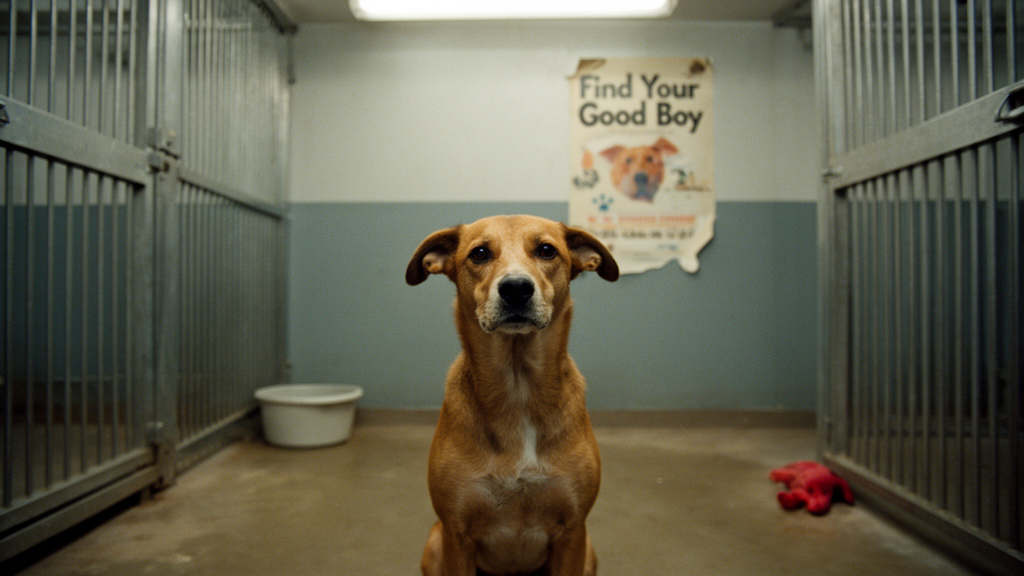
Consider the intake form at a typical municipal shelter. It asks about barking, chewing, jumping, and aggression. It does not ask about the dog’s history, their past trauma, their breed-specific drives, or the specific environment they will enter. It asks for a checklist of compliance. The result is a filtering system that rewards suppression and punishes expression. A dog who barks at the kennel door is flagged as ‘high energy’ or ‘reactive.’ A dog who pulls on the leash is flagged as ‘needs training.’ A dog who growls when handled is flagged as ‘aggressive.’ Meanwhile, the dog who sits quietly in the back of the kennel, who does not beg, who does not demand attention, who does not trigger any of the shelter’s red flags, is quietly marked as ‘good.’ And ‘good’ gets adopted first.
This is not a critique of shelter staff. They are doing the best they can with the data they have. But the data is flawed. It confuses compliance with well-being. It mistakes silence for safety. And it leaves behind the dogs who are most likely to be returned to the shelter once the novelty of a quiet dog wears off and the reality of a dog who has never learned how to communicate sets in.
What happens when a ‘good behavior’ dog goes home? The answer is predictable, and it is devastating. The dog has spent months, sometimes years, learning that their needs do not matter, that their signals are dangerous, and that the only way to survive is to disappear. They do not bark because they have learned that barking gets them moved to a quieter kennel, or worse, euthanized. They do not pull because they have learned that pulling gets them corrected. They do not growl because they have learned that growling gets them punished. They have learned to be invisible.
Then they go home. And the house is not a kennel. The house has children who run, other dogs who play, a yard that smells like everything, and a family that expects a dog to be a dog. The ‘good behavior’ dog does not know how to be a dog. They do not know how to play. They do not know how to set boundaries. They do not know how to ask for what they want. They have never been allowed to.
The result is not a ‘bad dog.’ The result is a dog who has never learned how to communicate, who is suddenly surrounded by stimuli they have spent their life avoiding, and who has no toolkit for navigating it. They may start barking. They may start pulling. They may start growling. They may start showing signs of anxiety, depression, or even aggression. And the family, who was told the dog was ‘good,’ is left confused, frustrated, and heartbroken. They did not get the dog they were promised. They got a dog who had been trained to survive, not to thrive.
This is the adoption myth that keeps dogs in shelters. It is not that ‘good behavior’ dogs are bad dogs. It is that ‘good behavior’ is often a symptom of a dog who has been broken by their environment, not a dog who has been healed by it. And when that dog enters a new home, the cracks show. The suppression fails. The signals return. And the dog, who was already ‘good,’ becomes ‘bad’ in the eyes of a family that never understood what they were getting.
The solution is not to stop screening for behavior. The solution is to screen for the right things. Instead of asking ‘Is your dog good?’, ask ‘What does your dog do when they are stressed?’ Instead of asking ‘Does your dog get along with other dogs?’, ask ‘How does your dog communicate with other dogs?’ Instead of asking ‘Is your dog house-trained?’, ask ‘What does your dog do when they need to go outside?’ These questions do not elicit a checklist. They elicit a story. They reveal the dog’s history, their coping mechanisms, their strengths, and their weaknesses. They reveal the dog as a living, breathing, feeling animal, not a set of compliance metrics.
Shelters that have made this shift report better outcomes. Dogs who were previously flagged as ‘high risk’ are getting adopted because adopters are educated to look beyond the surface. Dogs who were previously flagged as ‘good’ are getting matched with families who understand that ‘good’ often means ‘suppressed,’ and who are prepared to help the dog learn how to express themselves. The result is fewer returns, fewer euthanasias, and more dogs who are not just surviving, but thriving.
The myth is not that ‘good behavior’ dogs are bad. The myth is that ‘good behavior’ is good. It is not. It is often a cry for help. And until shelters and adopters understand that, dogs will continue to sit in kennels, waiting for a family that sees them not as ‘good,’ but as whole.