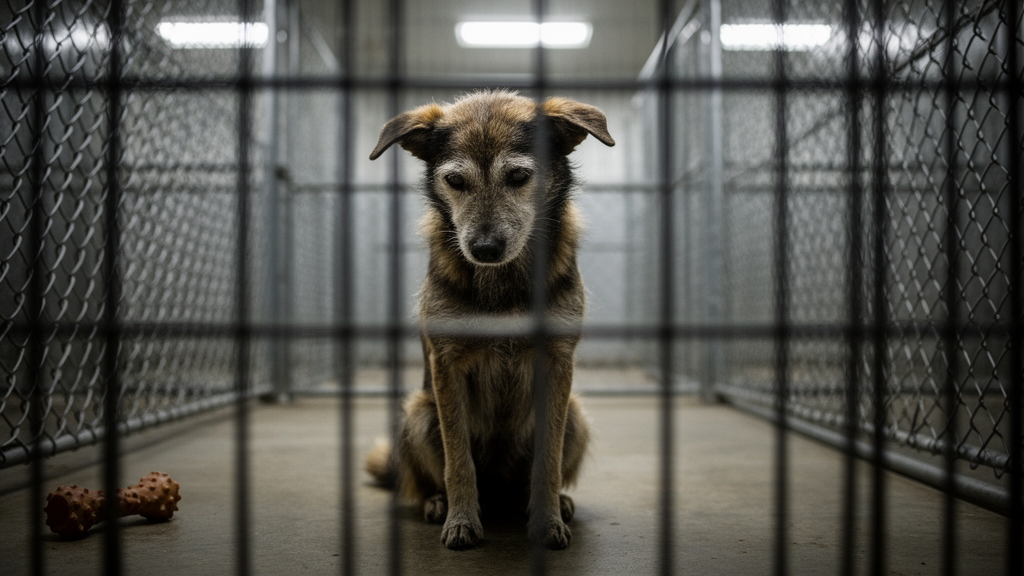
In a shelter intake room in Portland, a five-year-old mixed-breed dog named Barnaby sits perfectly still while a volunteer offers him a treat. He does not take it. He does not move away from it. He simply stares at the floor, his ears pinned back, his tail tucked tight against his belly. The volunteer marks him as ‘easygoing’ and ‘low-maintenance’ in the adoption file. Three months later, Barnaby is still there. And every day, he stares at the floor.
Shelters call this ‘good behavior.’ It is not. It is suppression, and it is the single most common reason dogs remain in shelters longer than they should. A dog who does not bark, does not jump, does not pull on the leash, and does not beg for attention is not a well-adjusted dog. He is a dog who has learned that any action he takes will be met with discomfort, rejection, or pain. He has learned to shut down. And because he is quiet, he is overlooked.
This is the adoption myth that keeps dogs in shelters: the belief that a quiet dog is a good dog. The reality is that a quiet dog is often a suppressed dog. And until shelters and adopters learn to read the difference, dogs like Barnaby will keep waiting for a home that does not exist.
What Suppression Actually Looks Like
Suppression is not the same as training. Training is the process of teaching a dog what to do. Suppression is the process of teaching a dog what not to do, and it leaves the dog with no alternatives. When a dog is repeatedly punished, ignored, or startled for normal canine behaviors, he learns to stop performing them. He does not learn a replacement behavior. He simply stops.
Suppressed dogs display a specific set of body language cues that experienced handlers recognize immediately. They are often mistaken for calmness by first-time adopters.
- Avoidance of eye contact. A trained dog will make soft, intermittent eye contact with their handler. A suppressed dog will actively avoid looking at people, often staring at the floor or turning his head away.
- Freezing. When approached, a suppressed dog will stand perfectly still, even if he is uncomfortable. He will not move toward or away from the stimulus. He will simply wait for it to pass.
- Submissive urination. This is not a housebreaking issue. It is an involuntary stress response triggered by direct eye contact, reaching over the dog’s head, or looming over him.
- Refusal to take food. A healthy, confident dog will take food from a hand. A suppressed dog will often refuse food when a stranger is present, or will take it extremely slowly, scanning the room the entire time.
- Yawning, lip-licking, and whale eye. These are displacement behaviors. They signal anxiety, not boredom. A dog who yawns repeatedly when no one is tired, or licks his lips when no food is present, is communicating stress.
When a shelter staff member sees a dog who does none of these things, they assume the dog is fine. They do not see the dog who is actively trying not to exist in the space. They do not see the dog who has learned that the safest thing he can do is nothing at all.
Why Shelters Reward Suppression
Shelters are operating under extreme resource constraints. Every kennel has a limit. Every staff member is stretched thin. Every dog costs money to house, feed, and care for. In this environment, a dog who does not bark, does not pace, and does not pull on the leash is a logistical miracle. He is easy to manage. He is easy to market. He is easy to adopt out.
Shelter staff are not trained to recognize suppression. They are trained to manage risk. A barking dog is a risk to neighbors and staff. A pacing dog is a risk to his own health. A pulling dog is a risk to the handler. A quiet dog is no risk. Therefore, a quiet dog is a good dog.
This is a false equivalence. A dog who is quiet because he is trained is different from a dog who is quiet because he is terrified. The former has options. The latter does not. And yet, shelters have no incentive to distinguish between the two. The faster a dog gets adopted, the faster the kennel opens for the next dog. Speed matters more than depth. And a suppressed dog is the fastest dog to adopt.
The result is a system that actively filters out the dogs who need the most help. The loud dogs, the anxious dogs, the dogs who pull and jump and bark, are the ones who get adopted first. Not because they are better dogs. Because they are louder. They are demanding attention. They are forcing the system to see them. And in doing so, they escape the kennel.
The quiet dogs are left behind. Not because they are bad dogs. Because they are good at being invisible.
How to Spot a Suppressed Dog Before You Adopt
If you are visiting a shelter, you need to look past the behavior and read the body language. Here is what to do.
Do not approach the dog directly. Sit on the floor. Turn your body slightly sideways. Let the dog come to you. Watch what he does. A confident dog will approach you, sniff your hand, and make eye contact. A suppressed dog will approach you slowly, avoid eye contact, and may not take your hand at all. He may simply sit beside you and stare at the floor.
Test his response to touch. Reach toward the dog slowly, from the side, not from above. A confident dog will relax into the touch. A suppressed dog will flinch, freeze, or pull away. He may not growl. He may not snap. He will simply shut down. This is not aggression. This is fear.
Offer a treat and watch him take it. Place a treat on the floor near the dog, not in your hand. A confident dog will take it immediately. A suppressed dog will hesitate. He may sniff it, look up at you, look back at the floor, and then slowly take it. Or he may not take it at all. This is not pickiness. This is anxiety.
Leave the room and watch what he does. This is the most revealing test. Walk out of the kennel and close the door. Watch the dog through the wire. A confident dog will settle down, lie down, and relax. A suppressed dog will often become more anxious. He may pace. He may bark. He may press himself against the back wall. He may stare at the door. This is separation distress. It is not a sign of a bad dog. It is a sign of a dog who has learned that people leave.
If you see these signs, do not walk away. This dog needs you. He needs someone who understands that his silence is not compliance. It is survival.
What to Do After You Bring Him Home
Bringing a suppressed dog home is not about training. It is about rebuilding trust. And trust is rebuilt slowly, through consistency, patience, and the willingness to let the dog set the pace.
Do not force interaction. Let the dog come to you. Do not pick him up. Do not hug him. Do not stare at him. Sit on the floor and read a book. Let him observe you. Let him decide when he is ready to approach you. This may take hours. It may take days. It may take weeks. Do not rush it.
Use food to rebuild positive associations. Place high-value treats on the floor near you. Do not throw them. Do not call him. Simply place them and walk away. Let him come to you when he is ready. This teaches him that your presence predicts good things, not discomfort.
Respect his boundaries. If he moves away, let him. If he does not want to be touched, do not touch him. If he is hiding, do not pull him out. Give him space. Give him options. Give him the chance to choose you, rather than forcing you onto him.
Be patient with housebreaking. Suppressed dogs often struggle with housebreaking. They are so focused on not making mistakes that they forget to signal when they need to go. Do not punish accidents. Do not rub their nose in it. Do not yell. Simply clean it up and try again. This is not stubbornness. This is fear.
Consider professional help. If your dog is severely suppressed, consider working with a certified behavior consultant who specializes in fear and anxiety. They can help you create a structured plan to rebuild his confidence and trust. This is not a sign of failure. It is a sign of commitment.
Why This Matters Beyond the Shelter
Suppression is not a shelter problem. It is a dog problem. Every dog who has been punished, ignored, or startled for normal canine behaviors has the capacity to become suppressed. Every dog who has learned that the safest thing he can do is nothing at all carries that lesson into his next home.
When we adopt a suppressed dog, we are not adopting a quiet dog. We are adopting a dog who has learned to survive. And survival is not living. It is waiting. It is hoping. It is praying that the next person will be different.
If you are looking for a dog who will not bark, will not pull, will not jump, will not beg, will not demand attention, look harder. Look past the silence. Look past the stillness. Look for the dog who is trying not to exist. He is the one who needs you most. And he is the one who will love you the deepest, once he learns that he is allowed to exist.
Do not adopt a dog because he is quiet. Adopt a dog because you understand what his silence means. And then, do the work to help him find his voice.
Frequently Asked Questions
How do I know if my dog is suppressed?
Watch his body language, not his behavior. If he avoids eye contact, freezes when approached, urinates involuntarily when touched, refuses food from strangers, or displays displacement behaviors like yawning and lip-licking, he is likely suppressed. These are stress signals, not calmness.
Can a suppressed dog ever become confident?
Yes. With patience, consistency, and the right environment, suppressed dogs can rebuild their confidence. The key is to never force interaction, always let the dog set the pace, and use food to create positive associations. This process can take weeks, months, or even years, depending on the severity of the suppression.
Should I adopt a suppressed dog?
If you are an experienced dog owner who understands body language, has the time and patience to work with a fearful dog, and is committed to never forcing interaction, then yes. If you are looking for an easy dog who will not demand attention, then no. A suppressed dog requires work, not a quiet kennel.
What should I avoid doing with a suppressed dog?
Avoid forcing eye contact, reaching over his head, picking him up, hugging him, staring at him, punishing accidents, or pulling him out of hiding. These actions reinforce his belief that human interaction equals discomfort. Instead, sit on the floor, let him come to you, and use food to build positive associations.
How long does it take for a suppressed dog to recover?
There is no fixed timeline. Some dogs begin to show signs of confidence within weeks. Others take months. Some never fully recover, but they can still live happy, fulfilling lives with the right owner. The key is to measure progress by the dog’s willingness to engage, not by a calendar.