Shelters call them ‘easygoing’ or ‘low energy.’ You read the intake form, see the word ‘good,’ and imagine a dog who will fit neatly into your life without drama. But a quiet dog in a kennel is rarely a calm dog. It is usually a dog who has learned that making a sound, making a move, or making a wish only brings more stress. The ‘good behavior’ you are admiring is not a personality trait. It is a survival strategy called suppression, and it is the single biggest barrier to adopting a dog that actually matches your home.
Suppression happens when a dog’s anxiety or fear exceeds their ability to cope. Instead of barking, biting, or bolting, the dog shuts down. They stop moving. They stop looking at you. They stop reacting to their environment entirely. To an adoption counselor scanning a room full of barking, jumping, and pacing dogs, the quiet one looks like a relief. To a dog who has spent months or years in that shelter, silence is the only safe option left.
This is why the ‘good behavior’ trap keeps dogs in shelters for months, sometimes years, while the dogs who are actively struggling get moved to euthanasia lists first. The dog who is suppressed is not ready for your home. He is waiting for a reason to feel safe enough to stop holding his breath.
What Suppression Actually Looks Like
Suppression is not the same as relaxation. A relaxed dog breathes deeply, keeps his weight balanced, and engages with his environment when he chooses. A suppressed dog is in a state of learned helplessness. He has learned that his actions do not change his outcome, so he stops trying. The signs are subtle, and they are easy to miss if you are looking for the wrong things.
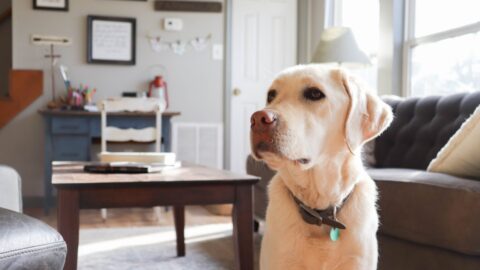
Watch the eyes. A suppressed dog often avoids direct eye contact, or he stares at a fixed point in the distance with a glassy, unfocused look. His ears may be pinned back, not in a friendly way, but in a way that signals he is trying to make himself smaller. His tail is usually tucked or held low and still, not wagging. He does not greet you. He does not sniff your hand. He sits or lies down and waits.
Watch the mouth. A relaxed dog might have a soft, open mouth. A suppressed dog often has a tight, closed mouth, or he licks his lips rapidly. This is a displacement behavior, a signal that he is trying to self-soothe because he is uncomfortable. If you offer a treat, he might take it gently, but he will not eat it. He will hold it in his mouth and swallow it later, or he will drop it. This is not pickiness. It is a lack of appetite caused by stress.
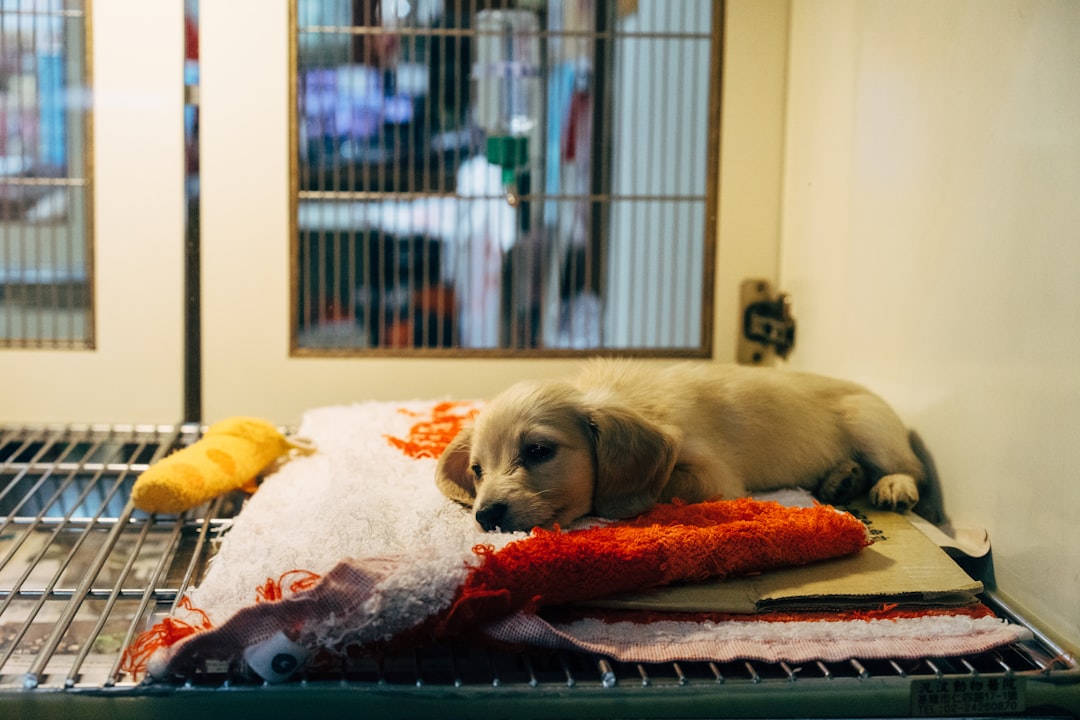
Watch the body. A suppressed dog often has a lowered head, a hunched back, and a rigid posture. He does not shift his weight. He does not stretch. He exists in the kennel as a static object, conserving energy and avoiding attention. This is not ‘calm.’ This is ‘frozen.’
Why Shelters Reward Suppression
Shelters are loud, chaotic, and frightening environments. Dogs are packed into concrete or chain-link runs, surrounded by the sounds of barking, barking, and barking. For a dog who is already anxious, this is a daily assault. The goal for any dog in this environment is to survive. The most efficient way to survive is to not trigger the staff, not trigger the other dogs, and not trigger the potential adopters.
Adoption counselors are overworked and under-resourced. They have to process dozens of dogs a day. They do not have time to sit with a dog for an hour and decode his body language. They look for quick indicators of safety and temperament. A dog who sits quietly, does not bark at the fence, and does not lunge at other dogs is marked as ‘adoptable.’ A dog who barks, paces, or shows signs of stress is marked as ‘high energy’ or ‘reactive’ and moved to the bottom of the list.
This system is not designed to find the best match. It is designed to move dogs out of the building as fast as possible. And it systematically filters out the dogs who need the most help. The dog who is suppressed is the perfect candidate for this system: he is invisible, he is quiet, and he requires no intervention. He is the dog who will sit in your home for years, waiting for you to notice that he is not actually happy.
How to Spot a Suppressed Dog Before You Adopt
You can spot a suppressed dog if you know what to look for. The key is to ignore the ‘good behavior’ and look for the stress signals. When you visit a shelter, do not just look at the dog who is sitting quietly. Look at the dog who is hiding in the back of the kennel. Look at the dog who is not responding to your voice. Look at the dog who is not engaging with you at all.
Ask to see the dog in a neutral space, away from the noise of the kennels. Watch how he reacts to you. Does he approach you? Does he avoid you? Does he freeze? Does he lick his lips? Does he yawn? These are all signs of stress. A dog who is truly relaxed will engage with you, even if he is shy. He will sniff your hand, he will look at your face, he will show some curiosity. A dog who is suppressed will do none of these things. He will remain rigid, still, and distant.
Ask the shelter staff about the dog’s history. Where did he come from? How long has he been here? Has he been adopted before? A dog who has been returned multiple times is likely suppressed, not ‘difficult.’ He has learned that his needs are not being met, and he has shut down. A dog who has been in the shelter for six months or more is likely suppressed, not ‘low energy.’ He has learned that waiting is the only way to survive.
Do not be fooled by the ‘good behavior’ label. It is a trap. It keeps dogs in shelters for years, and it keeps good dogs out of homes that could help them. If you see a dog who is quiet, still, and unresponsive, ask yourself: is this dog actually calm, or is he suppressed? If you are not sure, ask to spend more time with him. Sit on the floor. Ignore him. Let him come to you. Watch his body language. If he remains rigid, if he avoids eye contact, if he does not engage, he is suppressed. And he needs you.
What to Do When You Bring a Suppressed Dog Home
Bringing a suppressed dog home is not like bringing home a ‘good’ dog. It requires patience, observation, and a willingness to let him set the pace. Do not force interaction. Do not pick him up. Do not stare at him. Let him explore his new environment on his own terms. Give him a quiet room with a bed, water, and food. Let him hide if he needs to. Let him observe you from a distance.
Build trust slowly. Sit near him. Read a book. Talk softly. Do not reach for him. When he does, offer a treat, but do not force him to take it. Let him choose. This is the first step in breaking the cycle of suppression. He needs to learn that his choices matter, that his actions have consequences, and that he is safe.
Be patient. Suppression does not disappear overnight. It takes weeks, months, or even years for a dog to unlearn the belief that he must shut down to survive. But when a suppressed dog finally feels safe, he transforms. He becomes playful, curious, and affectionate. He learns to trust. He learns to love. And he becomes the dog you always hoped he would be.
The next time you visit a shelter, ignore the ‘good behavior’ label. Look for the quiet dog in the back. Look for the one who is not engaging. Look for the one who is suppressed. He is not a burden. He is a gift. And he is waiting for you to notice him.
Sources & Further Reading
- Body Language: A Dog's Perspective — ASPCA
- Understanding Dog Body Language — American Kennel Club
- Learned Helplessness in Dogs: Understanding Stress and Shutdown Behavior — PetMD
Photo by Markus Winkler on Unsplash.