Everyone agrees that resource guarding is a problem. Nobody mentions that the word ‘guarding’ makes owners hear ‘aggression’ before they even see the behavior, and that fear-based misunderstanding is exactly what turns a manageable quirk into a bite. Resource guarding in dogs is not aggression. It is a learned behavior, a dog’s rational choice to protect something they value, and it can be fixed with counter-conditioning, not punishment.
The accepted premise is that a dog who growls over a bone, a toy, or your lap is ‘being dominant’ or ‘showing aggression.’ The turn is that the dog is simply communicating a clear boundary: ‘I value this, and I want you to stop.’ The growl is a warning, not a threat. Punishing the growl doesn’t remove the motivation; it removes the warning. The dog learns that the next time they feel the pressure, they skip the growl and go straight to the bite. That is the exact mechanism that turns a manageable quirk into a bite.
Why Dogs Guard Resources (The Three Categories)
Dogs guard three distinct categories of resources, and each requires a slightly different counter-conditioning approach. Understanding the category is the first step to fixing the behavior.
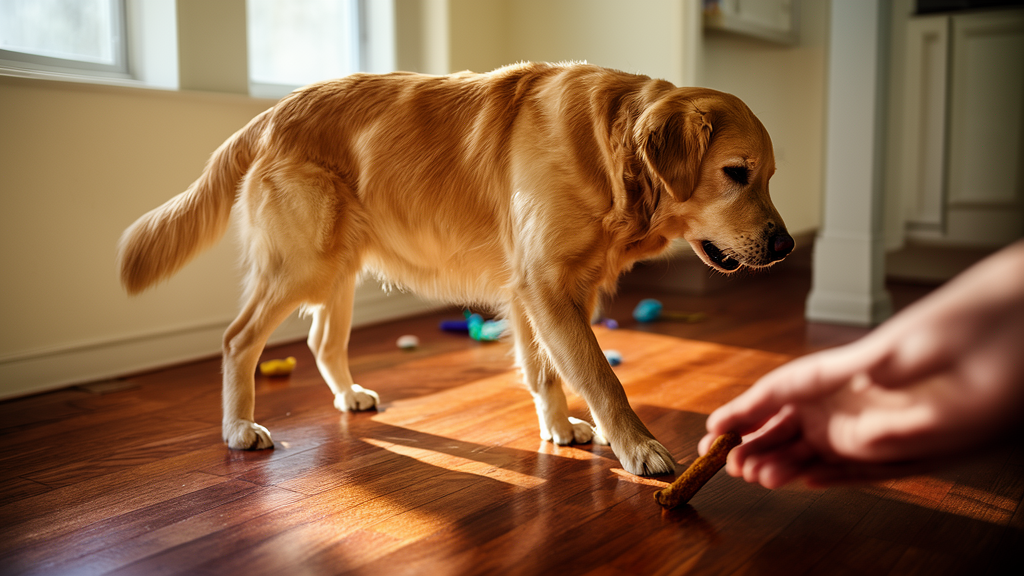
Food and chews. This is the most common form. A dog who paws at your hand when you reach for their Kong, or who eats faster when you’re nearby, is protecting a high-value resource. This is deeply instinctual. Wolves guard kills. Domestic dogs guard bones. The behavior makes evolutionary sense.
Space and people. A dog who growls when you try to pet them while they are sleeping, or who positions their body between you and the door, is guarding space. This is often misread as ‘protection’ or ‘alpha’ behavior. It is usually anxiety. The dog is trying to control their environment because they feel vulnerable.
Objects and toys. A dog who runs away with your sock, or who snatches a squeaky toy and retreats to a corner, is guarding an object. This is often playful, but it can escalate if the dog learns that running away is the only way to keep the toy.
The Counter-Conditioning Protocol (The ‘Trade-Up’ Game)
The fix for resource guarding is counter-conditioning. You change the dog’s emotional response to your presence near their resource. Instead of ‘human near bone = bone goes away,’ the equation becomes ‘human near bone = better things appear.’
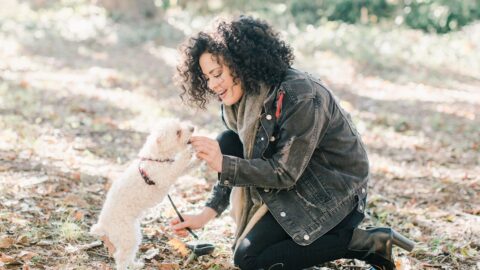
Step 1: The Trade-Up Game. Start when the dog has a low-value chew. Walk past them. Toss an incredibly high-value treat (cheese, hot dog, freeze-dried liver) near them. Walk away. Do not take the chew. Do not ask for a ‘drop it.’ The dog learns that your approach predicts good things, not bad things. Repeat this daily until the dog wags their tail and looks up when you approach, instead of freezing or growling.
Step 2: The Hand-Feed. Once the dog is comfortable with your approach, start feeding them their kibble by hand. Place your hand in the bowl. The dog learns that your hand is not a threat to the food, but the source of the food. This builds trust around the highest-value resource: their daily meals.
Step 3: The ‘Drop It’ Cue (Only After Trust Is Built). Only after the dog is reliably happy when you approach their chew, teach the ‘drop it’ cue. Hold a high-value treat near their mouth. Say ‘drop it.’ When they release the chew to take the treat, praise and give them the treat. Then, immediately give the chew back. This teaches the dog that ‘drop it’ means ‘I get the treat AND I get my chew back.’ This is the critical step that prevents the dog from feeling robbed.
When a Spreadsheet Is Still the Right Call (The Honest Limits)
Counter-conditioning works for mild to moderate resource guarding. It does not work for dogs who have already bitten without warning, or for dogs with severe fear-aggression rooted in trauma. If a dog has bitten without a growl, or if they are terrified of human hands near any object, the ‘Trade-Up’ game is too slow. These dogs need a management plan and a certified behavior consultant (DACBC or veterinary behaviorist) to design a desensitization protocol that prioritizes safety over teaching cues.
Management is the first step for any guarding dog. Never punish the growl. Never reach over a sleeping dog. Never take a chew away forcefully. Use baby gates, feed dogs in separate rooms, and pick up high-value toys when you are not actively training. Management prevents rehearsal of the behavior while you work on the counter-conditioning protocol.
Why This Matters Beyond the Kitchen Floor
Resource guarding is not a character flaw. It is a communication. When you fix the guarding, you are not just saving your sock or your bone; you are teaching your dog that you are not a threat to what they value. That trust extends to every other interaction. A dog who trusts you around their food is a dog who trusts you around their space, their people, and their future. That is why fixing resource guarding is one of the most important things you can do for your dog’s long-term well-being.