
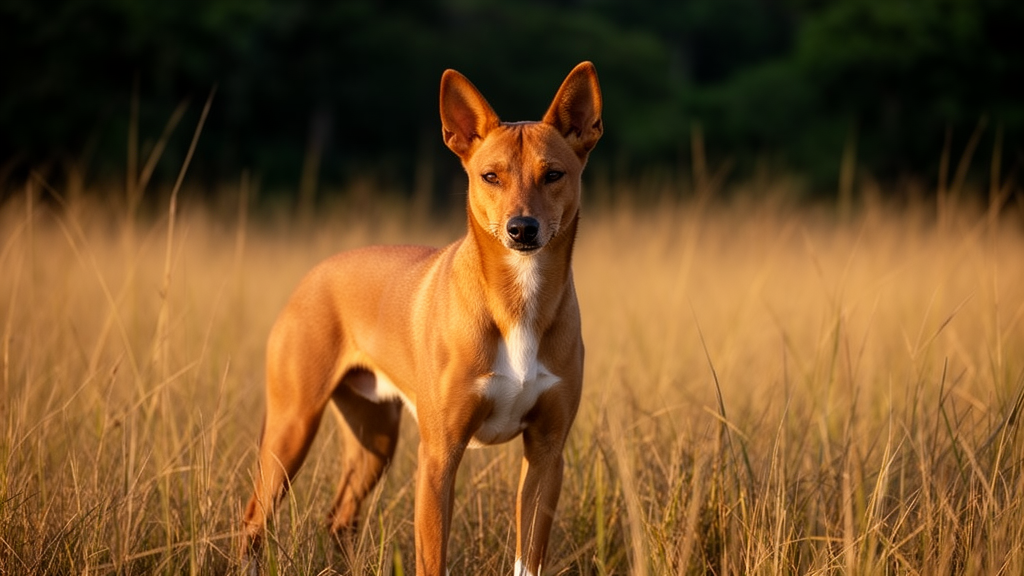
You are standing in a village in the Democratic Republic of Congo, watching a small, fawn-colored dog move across the savanna grass. The dog is not barking. It is making a low, guttural sound that sounds like a groan, or a yodel, or a sneeze. It is the Basenji, and that sound is the sound of a dog that was bred to hunt in a way that required silence.
The Basenji is the only dog breed that does not bark. For a dog that spends its life working alongside humans, that is a massive evolutionary trade-off. The breed does not bark because the specific hunting method it was developed for in Central Africa required it. When you hunt small, fast game like forest antelope, making a loud, repetitive sound like a bark gives away your position. The prey hears you, and the hunt is over. The Basenji’s yodel, technically called a baroo, is a controlled, rhythmic exhalation. It is a sound the prey does not recognize as a threat, allowing the dog to communicate with its handler without alerting the game.
This is not a quirk. It is a direct adaptation to a specific working purpose. The Basenji’s entire anatomy, from its tight, short coat to its high energy levels, is a response to the Central African environment. It is a breed that was never meant to be a lap dog. It was meant to be a silent, tireless hunter.
The Anatomy of Silence
To understand why the Basenji does not bark, you have to look at the mechanics of its voice box. Most dogs have a larynx designed to produce loud, repetitive sounds. The Basenji’s larynx is shaped differently. It is tighter, narrower, and positioned in a way that makes barking physically difficult. The dog can make a variety of sounds, including the yodel, a whine, and a low groan, but the classic “woof” is anatomically suppressed.
This is not a genetic mutation. It is a selective breeding outcome. For thousands of years, hunters in Central Africa selected for dogs that could hunt without making noise. The dogs that barked were culled from the breeding pool. The dogs that yodeled, or stayed silent, were kept. The result is a breed that has been bred for silence for longer than most modern breeds have existed.
The Basenji’s ears are also a factor. They are high-set, tight, and pointed. They are designed to pick up the faintest sounds in the bush. A dog that barks constantly cannot hear the subtle movements of its prey. The Basenji’s ears are part of its silent hunting toolkit. They are sensitive, directional, and always listening.
The Baroo: More Than Just a Yodel
The sound the Basenji makes is not just a lack of barking. It is a specific, complex vocalization called a baroo. It is a rhythmic, guttural sound that is unique to the breed. The sound is produced by a controlled exhalation through the nose and mouth, creating a series of short, sharp bursts. It is a sound that is low enough to not alert game, but distinct enough for the handler to recognize.
The baroo is used in several contexts. It is a hunting signal, a greeting, and a way to express frustration. When a Basenji is hunting, the baroo is a way to communicate with the handler without alerting the prey. When the dog is greeting its owner, the baroo is a way to express excitement without being disruptive. When the dog is frustrated, the baroo is a way to express displeasure without being aggressive.
The baroo is not a flaw. It is a feature. It is the sound of a dog that has been bred to work in a way that requires silence. It is a sound that is unique to the breed, and it is a sound that is deeply tied to the Basenji’s history.
The Coat and the Climate
The Basenji’s coat is another adaptation to its environment. It is short, tight, and fine. It is a coat that sheds very little, which is a major advantage in a hot, humid climate. The coat is also self-cleaning. The dog’s grooming habits, combined with the coat’s texture, mean that the dog stays clean with minimal effort. This is a crucial trait for a hunting dog. A dog that is constantly dirty is a dog that is slow, and a slow dog does not survive in the bush.
The coat is also a reflection of the breed’s history. The Basenji was bred to hunt in the dense forests of Central Africa. A long, thick coat would be a liability in such an environment. It would trap heat, collect burrs, and slow the dog down. The short, tight coat is a direct adaptation to the climate and the terrain. It is a coat that allows the dog to move quickly and stay cool.
The coat is also a marker of the breed’s purity. The AKC standard for the Basenji specifies a short, tight, fine coat. Any deviation from this standard is considered a fault. This is not just a matter of aesthetics. The coat is a functional part of the breed’s design. It is a coat that has been selected for over thousands of years to meet the demands of the Central African environment.
High Energy, High Drive
The Basenji is a high-energy dog. It has a high prey drive, a high exercise requirement, and a high intelligence level. These are not flaws. They are the direct result of the breed’s working history. A dog that is bred to hunt small, fast game must have the energy to keep up, the drive to pursue, and the intelligence to track. The Basenji has all three.
This high energy is often misunderstood by new owners. They expect a small, quiet dog to be a low-energy companion. The Basenji is not. It is a working dog. It needs exercise, mental stimulation, and a job to do. Without these, the Basenji will become bored, frustrated, and destructive. The dog will dig, chew,, and escape. It will not bark, but it will find other ways to express its frustration.
The Basenji’s high drive is also a challenge for training. The dog is intelligent, but it is also independent. It does not have a strong desire to please its handler. It has a strong desire to do what it was bred to do: hunt. Training a Basenji requires patience, consistency, and a deep understanding of the breed’s history. It is not a dog for first-time owners. It is a dog for experienced handlers who understand the demands of a working breed.
From Africa to the Show Ring
The Basenji was introduced to the Western world in the 1930s. It was discovered by a British explorer, James G. Mead, who brought a few dogs back to England. The dogs were an instant sensation. They were small, quiet, and unique. They were also difficult to keep. The dogs were high-energy, independent, and required a lot of exercise. They were not the ideal house pet.
The Basenji was quickly recognized by the AKC. It was placed in the Hound Group, where it remains today. The breed’s unique characteristics, including its lack of barking, its yodel, and its tight coat, made it a favorite among breed enthusiasts. The breed’s popularity grew, but it never reached the levels of more common breeds like the Labrador Retriever or the German Shepherd.
The Basenji’s history in the West is a story of adaptation. The dogs had to adapt to a new environment, a new culture, and a new purpose. They had to learn to live in houses, to walk on leashes, and to interact with other dogs. They had to learn to be pets, not just hunters. It was a difficult transition, but the breed survived. The Basenji is still a working dog at heart, but it has also become a beloved companion.
The Modern Basenji: A Working Dog in a House
The modern Basenji is a unique challenge for owners. It is a dog that has been bred to work in a way that is almost impossible to replicate in a suburban home. The dog has a high prey drive, a high energy level, and a high intelligence level. It is a dog that needs a job, even if that job is just a daily walk or a game of fetch.
The Basenji is also a dog that does not like to be bored. It is a dog that will find its own entertainment if it is not provided with enough stimulation. This can lead to destructive behaviors, such as digging, chewing, and escaping. The Basenji is also a dog that is not easily trained. It is a dog that is independent, stubborn, and not eager to please. It is a dog that requires a handler who understands the breed’s history and its needs.
The Basenji is not a dog for everyone. It is a dog for experienced handlers who are willing to put in the time and effort to meet the breed’s needs. It is a dog that requires a lot of exercise, mental stimulation, and a deep understanding of the breed’s history. It is a dog that is not easily satisfied, and it is a dog that will not hesitate to let you know if it is not happy.
The Basenji is a breed that has been shaped by its history. It is a breed that was bred to hunt in a way that required silence. It is a breed that has been selected for thousands of years to meet the demands of the Central African environment. It is a breed that is unique, challenging, and deeply rewarding for those who understand its history and its needs.
If you are considering a Basenji, you must be prepared for the challenge. It is not a dog that will simply sit at your feet and be quiet. It is a dog that will run, jump, and explore. It is a dog that will yodel, not bark. It is a dog that will challenge you, but it will also reward you with a deep, loyal bond. It is a dog that is worth the effort, if you are willing to put it in.