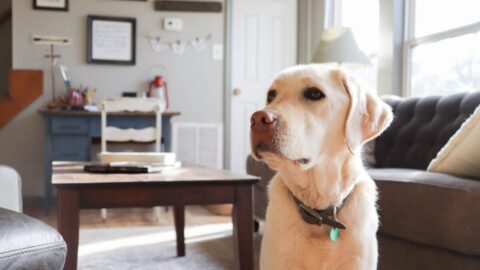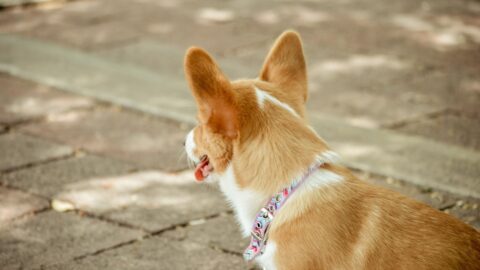

You are standing in the living room, scrolling through a listing that says ‘perfect for apartments’ and ‘quiet companion.’ The photo shows a small, calm-looking dog. You picture a life of peace, a dog that naps while you work, and zero complaints from the neighbors. Then you bring him home, and he decides to yodel at the sound of a leaf blowing across the sidewalk. The listing was not lying about the size. It was lying about the noise.
The apartment dog myth is not about square footage. It is about the dangerous assumption that a small dog is a quiet dog. This is a false correlation that keeps well-meaning owners in a cycle of frustration, rehoming, and noise complaints. The real predictor of quietness is not the dog’s weight, but the breed’s historical drive and the owner’s ability to manage it. If you do not understand the difference between a dog that is bored and a dog that is driven, you will buy a ticket to a noisy apartment whether you get a Chihuahua or a Great Dane.
The Small Dog, Loud Dog Fallacy
When people search for the best dog breed for apartment living, they almost universally start with size. They look for small dogs, assuming that a smaller animal produces a smaller sound. This is a fundamental misunderstanding of canine acoustics and behavior. A Chihuahua does not bark less than a Border Collie. In fact, the opposite is often true. Small breeds were frequently bred for vermin control, specifically hunting rats in barns and stables. To do this, they had to be loud, persistent, and highly reactive to movement. They were not bred to be ignored; they were bred to be heard.
Consider the Terrier group. A Jack Russell Terrier weighs less than twenty pounds, yet he possesses a vocalization threshold that rivals a Doberman. When a Jack Russell sees a squirrel, his brain does not calculate the decibel level of his bark. His brain fires a command to alert the pack, to drive the vermin out, and to demand attention. If you live in a duplex, that command echoes through the floorboards. The size of the dog is irrelevant to the volume of the signal. The drive behind the signal is what matters.
This is why the ‘best dog breed for families’ search often leads to disaster for apartment dwellers. A family might want a small dog for the kids, but they do not realize that a high-drive small dog requires high-drive management. If you give a Jack Russell a job, he will invent one. If you do not give him a job, he will bark at the mail carrier, the elevator, and the neighbor’s cat. The result is not a ‘quiet companion.’ The result is a constant state of alert that exhausts both the dog and the neighbors.
Drive vs. Size: The Real Apartment Equation
To find a dog that actually fits your lifestyle constraints, you must stop looking at size and start looking at drive. Drive is the biological imperative that pushes a dog to perform a specific behavior. A herding dog has a drive to chase and control movement. A scent hound has a drive to follow a trail. A toy breed has a drive to alert and bond. A large working breed has a drive to patrol and protect.
When you match drive to your apartment lifestyle, you find breeds that are naturally quieter because their primary biological urge is not vocalization. Take the Greyhound. He weighs over sixty pounds, which violates the ‘small dog’ rule, yet he is widely considered the ultimate apartment dog. Why? Because his drive is sprinting, not barking. He is a coursing breed, evolved to chase prey by sight over long distances. Once he has had his sprint, his energy reserves are depleted. He sleeps. He does not bark at the elevator. He does not yodel at the leaf. He is quiet because his drive has been satisfied.
Contrast this with a Shih Tzu. He is small, he is gentle, and he is often recommended for seniors. But his drive is companionship and alerting. He was bred to sit on the laps of Chinese emperors and announce the arrival of anyone who approached the palace gates. He is a watchdog. He will bark at the wind. He will bark at the vacuum. He will bark at his own reflection. If you want a quiet apartment, a Shih Tzu is a high-risk choice unless you are prepared to manage his alerting drive with counter-conditioning and environmental management. Size does not protect you from his noise. His genetics do.
This is the critical distinction. If you are looking for the best dog breed for seniors, you might assume a small, quiet dog is the answer. But a small, alerting dog can be just as noisy as a large, working dog. The key is to find a breed whose drive aligns with a sedentary or low-stimulus environment. A Basset Hound, for example, is large, but his drive is scent. He is often content to follow a trail on the floor. He is not driven by visual stimuli, so he is less likely to bark at passing cars. He is quiet because his primary obsession is internal, not external.
How to Evaluate Breeds Against Your Constraints
So how do you actually find a dog that fits your specific lifestyle constraints? You must run every breed through a simple drive-filter. Ask yourself: what is this dog’s primary biological urge? And does that urge create noise in a confined space?
Here is a quick evaluation of common apartment candidates, ranked by their noise risk, not their size:
- Greyhound / Whippet: Low noise risk. Drive is sprinting. Energy is episodic. Quiet when rested.
- Basset Hound / Beagle: Medium noise risk. Drive is scent. They may bay or howl when they lose a trail, but they rarely bark at nothing.
- Shih Tzu / Pomeranian: High noise risk. Drive is alerting. They are wired to announce everything. Requires active management.
- Jack Russell / Terrier: Very high noise risk. Drive is vermin control. They bark at movement. High energy, high vocalization.
- Border Collie / Australian Shepherd: Extreme noise risk. Drive is herding. They will bark to control kids, cats, and other dogs. Not an apartment breed unless you are a professional herder.
Notice that size is nowhere in this list. A Greyhound is huge, but he is quiet. A Jack Russell is tiny, but he is loud. If you are looking for the best dog breed for first-time owners, you might be tempted by the Shih Tzu because he is small and easy to handle. But if you are not prepared to manage his alerting drive, you will be the owner who gets three noise complaints in the first month. First-time owners often mistake ‘easy to handle’ for ‘easy to live with.’ They are not the same thing.
The same logic applies if you are looking for the best dog breed for kids. A high-drive small dog can be dangerous to children because his alerting drive makes him unpredictable. A sudden movement from a toddler can trigger a bark, a snap, or a freeze. A large, low-drive dog, like a Newfoundland, might be too slow to react, but he is unlikely to bark at the toddler’s laughter. He is quiet because his drive is companionship and guarding, not alerting. He is a better fit for a noisy household, even if he takes up more space.
The Solution: Match Drive to Your Life
The solution to finding a dog that matches your specific lifestyle constraints is to stop looking at size. Start looking at drive. If you want a quiet apartment, you need a dog whose primary biological urge is not vocalization. You need a dog who is satisfied by sprinting, by scenting, or by simply lying on the couch. You do not need a dog who is satisfied by barking at the world.
When you evaluate breeds, ask yourself: what does this dog do all day? If he barks, what is he trying to achieve? If he is trying to alert you to a squirrel, he is an alerting breed. If he is trying to chase the squirrel, he is a coursing breed. If he is trying to find the squirrel’s scent, he is a scenting breed. Match the drive to your environment, and you will find a dog that is not just small, but truly quiet.
This is the mistake most apartment owners make. They buy a small dog and expect silence. They get a small dog and a loud dog. They do not understand that size is not a predictor of quietness. Drive is. If you understand the drive, you can find a dog that fits your apartment, your kids, and your sanity. If you ignore the drive, you will find a dog that fits your living room, but not your life.
The next time you search for the best dog breed for apartment living, ignore the weight limit. Look at the work history. Look at the drive. Look at the noise. Find a dog whose silence is built into his genetics, not just his size. That is the only way to ensure a quiet home.
Sources & Further Reading
- Barking: Understanding and Managing Unwanted Vocalization — American Kennel Club
- Greyhound: Apartment Friendly — American Kennel Club
- Terrier Group: Breed Characteristics — American Kennel Club
- Canine Behavior: A Photo Illustrated Handbook — Simon & Schuster
Photo by Crystal Tubens on Unsplash.