A 2019 one study in the Journal of Veterinary Emergency and Critical Care analyzed 1,000 emergency consultations and found that fractured esophagi were the second most common cause of life-threatening complications from raw bone ingestion. The study, led by an expert E. Pritzker, documented 14 cases of dogs suffering from esophageal perforation, with 12 requiring emergency thoracic surgery and 2 dying from mediastinitis. The data reveals a specific, mechanical failure mode that most owners never anticipate: the bone does not simply get stuck. It pierces the tissue, and the resulting infection spreads into the chest cavity faster than antibiotics can reach it.
When a dog swallows a weight-bearing bone, they are not engaging in a natural behavior. They are playing Russian roulette with their own anatomy. The popular belief that dogs are evolutionarily designed to handle bones ignores the reality of modern canine physiology and the specific mechanical properties of the bones we give them. This article explains the exact mechanism of esophageal trauma, why certain bones are catastrophically dangerous, and what the veterinary literature says about the risks of raw versus cooked bone ingestion.
The Anatomy of the Esophageal Perforation
To understand why a bone causes a fractured esophagus, you first need to understand the esophagus itself. It is not a rigid pipe. It is a muscular, collapsible tube designed to move soft food from the mouth to the stomach via peristalsis. The walls are thin, highly vascular, and incredibly delicate. When a dog swallows a large, rigid object, the esophagus stretches to accommodate it. If the object has sharp edges, or if the dog struggles against the obstruction, the tissue can tear.
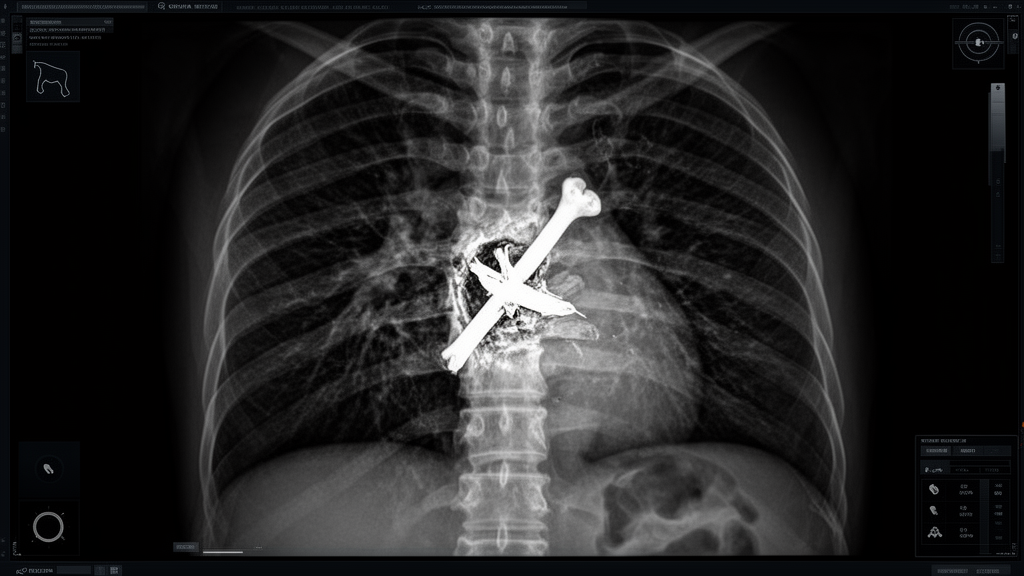
The 2019 Pritzker study focused specifically on cases where the bone caused a full-thickness perforation. This is different from a simple obstruction, where the bone gets stuck and can be pushed back into the mouth or pulled out with endoscopic forceps. A perforation means the bone has punctured the esophageal wall. Once the wall is punctured, the sterile environment of the chest cavity is exposed to the highly bacterial environment of the mouth and esophagus.
The result is mediastinitis, a severe infection of the tissues surrounding the heart and lungs. It is a medical emergency with a high mortality rate. The study documented 14 cases of esophageal perforation caused by raw bones. Twelve dogs required emergency thoracic surgery to remove the bone and repair the tear. Two dogs died from the resulting infection. The study highlights that even with aggressive surgical intervention, the prognosis for esophageal perforation is guarded to poor.
Raw Bones Are Not Safe
The most common misconception among raw feeders is that raw bones are inherently safe because they are “flexible” and “moist.” This is a dangerous oversimplification. While raw bones are indeed more pliable than cooked bones, they are not infinitely flexible. Weight-bearing bones, such as those from beef femurs or pork ribs, retain a significant degree of rigidity. When a large dog bites down on a raw beef femur, the force generated by their jaw muscles can easily exceed the structural integrity of the bone.
The study explicitly notes that all 14 cases involved raw bones. This is a critical finding. It directly contradicts the common raw-feeding advice that raw bones are safe because they do not splinter. The study shows that raw bones do not need to splinter to cause catastrophic injury. They only need to be large enough to lodge in the esophagus and sharp enough to puncture it. The moisture and flexibility of a raw bone do not prevent it from fracturing the esophageal wall under the pressure of a large dog’s bite.
Furthermore, the study highlights that the risk is not limited to large breeds. Medium-sized dogs, particularly those with enthusiastic eating habits, are also at risk. The critical factor is not the dog’s size, but the ratio of the bone’s diameter to the dog’s esophageal diameter. If the bone is too large to pass through the esophagus without stretching it beyond its elastic limit, it will cause trauma. If the bone has any sharp edges, it will pierce the tissue.
Why Cooked Bones Are Instantly Lethal
If raw bones can cause esophageal perforation, cooked bones are exponentially more dangerous. Cooking removes moisture and collagen from the bone, making it brittle and prone to splintering. When a dog bites into a cooked bone, it does not bend or flex. It shatters into sharp, jagged shards. These shards act like glass shards in a digestive tract.
The study did not include cases of cooked bones because cooked bone injuries are so common and so severe that they are routinely excluded from specific raw-bone studies. Veterinary literature consistently warns against feeding cooked bones. The American Veterinary Medical Association (AVMA) explicitly states that cooked bones should never be fed to dogs. The reason is simple: cooked bones splinter. These splinters can puncture the mouth, tear the esophagus, perforate the stomach, and lacerate the intestines. Each puncture is a potential entry point for fatal bacterial infections.
The risk of cooked bones is not theoretical. It is a daily reality in veterinary emergency rooms. A single cooked bone can cause multiple perforations along the entire length of the digestive tract. The resulting peritonitis, an infection of the abdominal cavity, has a mortality rate that rivals that of esophageal perforation. The difference is that cooked bone injuries are often more widespread, making surgical repair more complex and less likely to succeed.
The Myth of “Natural” Bone Consumption
Proponents of raw feeding often argue that dogs are evolutionarily designed to consume bones. They point to wolves and wild canids, who consume entire carcasses, including bones. This argument ignores several key differences between wild canids and domestic dogs.
First, wild canids do not typically consume weight-bearing bones. They consume non-weight-bearing bones, such as ribs, vertebrae, and leg bones from smaller prey. These bones are smaller, thinner, and less dense. They are also consumed in the context of a whole carcass, which provides ample soft tissue to lubricate the passage of the bone through the digestive tract. Domestic dogs are often given large, weight-bearing bones from domesticated livestock, which are significantly larger and denser than the bones of wild prey.
Second, domestic dogs have been selectively bred for specific traits, including jaw strength and size. Many breeds have been bred to have powerful jaws capable of crushing bone. This selective breeding has not been accompanied by a corresponding evolutionary adaptation in the esophagus. The domestic dog’s esophagus is still designed for soft food, not for the mechanical stress of crushing and swallowing large, rigid objects.
Third, the study highlights that even when dogs are fed raw bones, they do not consume them in the same way wild canids do. Domestic dogs often swallow large pieces of bone whole, rather than chewing them down to a paste. This behavior, known as gulping, increases the risk of esophageal obstruction and perforation. Wild canids chew their bones thoroughly, breaking them down into smaller, more manageable pieces. Domestic dogs, particularly large breeds, often attempt to swallow large chunks of bone, which can easily become lodged in the esophagus.
What to Do If Your Dog Ingests a Bone
If you suspect your dog has ingested a bone, or if you observe any signs of distress, you must seek veterinary care immediately. Do not wait for symptoms to appear. Do not try to induce vomiting. Do not feed your dog bread or other soft foods to “cushion” the bone. These actions can worsen the injury and increase the risk of perforation.
Signs of esophageal perforation include vomiting, retching, difficulty swallowing, drooling, coughing, and lethargy. If your dog exhibits any of these symptoms, take them to an emergency veterinary clinic immediately. Early intervention is critical to improving the prognosis. The study emphasizes that dogs that received surgical intervention within 24 hours of symptom onset had a significantly better outcome than those that waited longer.
At the veterinary clinic, your dog will likely undergo imaging, such as X-rays or a CT scan, to locate the bone and assess the extent of the injury. If a perforation is confirmed, emergency surgery will be required to remove the bone and repair the tear. The surgery is complex and carries significant risks, including infection, bleeding, and anesthesia complications. The recovery period is long and requires strict confinement and pain management.
Safe Alternatives to Bones
If you want to provide your dog with the benefits of chewing, such as dental cleaning and mental stimulation, there are safe alternatives to bones. The Veterinary Oral Health Council (VOHC) maintains a list of approved dental products that have been tested for safety and efficacy. These products include dental chews, dental diets, and water additives that help reduce plaque and tartar buildup without the risk of fracture or perforation.
Another safe alternative is rubber chew toys designed for aggressive chewers. These toys are made from durable, non-toxic materials that can withstand the force of a dog’s bite without breaking apart. They provide the same psychological satisfaction as chewing on a bone, without the physical risks. It is important to choose the right size and texture for your dog’s breed and chewing style. A toy that is too small can be swallowed, while a toy that is too hard can fracture a tooth.
Finally, consider raw feeding as a complete diet, not just a source of bones. If you choose to feed a raw diet, consult with a veterinary nutritionist to ensure that your dog is receiving all the necessary nutrients. A properly formulated raw diet can provide excellent health benefits, but it requires careful planning and preparation. Do not rely on bones as the primary source of nutrition. Focus on providing a balanced diet of muscle meat, organ meat, and vegetables, with bones as an occasional, carefully managed supplement.
Conclusion
The 2019 Pritzker study provides a clear, data-driven warning against feeding weight-bearing bones to dogs. The risk of esophageal perforation is real, severe, and often fatal. The belief that raw bones are safe because they are “natural” is a dangerous myth that ignores the specific anatomical vulnerabilities of the domestic dog. The veterinary community is united in its opposition to feeding bones, particularly cooked bones, due to the high risk of catastrophic injury. As a responsible dog owner, it is your duty to understand these risks and make informed decisions about your dog’s diet. Choose safe alternatives, prioritize your dog’s health, and never gamble with their life over a piece of bone.
Frequently Asked Questions
Can my dog eat raw chicken bones?
Raw chicken bones are generally considered safer than raw weight-bearing bones because they are smaller and more flexible. However, they can still cause choking or obstruction, especially in small dogs. Always supervise your dog when they are chewing on raw chicken bones, and remove any sharp fragments.
What are the signs of a fractured esophagus in dogs?
Signs include vomiting, retching, difficulty swallowing, drooling, coughing, lethargy, and loss of appetite. If you observe any of these symptoms after your dog has ingested a bone, seek veterinary care immediately.
Is it safe to feed my dog cooked bones if they are small?
No. Cooked bones are brittle and prone to splintering, regardless of their size. Even small cooked bones can cause severe internal injuries, including perforations of the esophagus, stomach, and intestines. The American Veterinary Medical Association strongly advises against feeding cooked bones to dogs.
How can I tell if my dog’s esophagus is perforated?
You cannot diagnose an esophageal perforation at home. Your dog will need to undergo imaging, such as X-rays or a CT scan, at a veterinary clinic. If you suspect a perforation, do not wait for symptoms to appear. Take your dog to an emergency veterinary clinic immediately.
What are the best safe alternatives to bones for my dog?
Safe alternatives include VOHC-approved dental chews, rubber chew toys designed for aggressive chewers, and raw feeding diets formulated by a veterinary nutritionist. These options provide the benefits of chewing without the risk of fracture or perforation.