
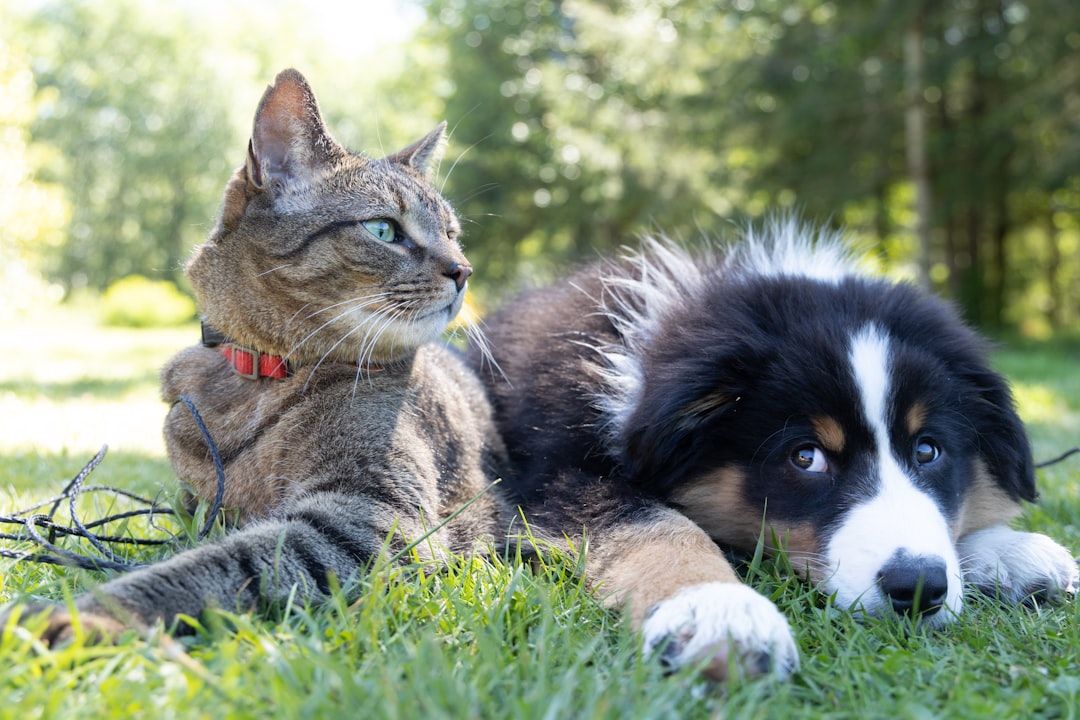
Dogs outperform cats in human cooperation because they evolved to read human gestures, a biological adaptation cats never developed. This isn’t about loyalty or affection, which both species possess in abundance. It is about a specific cognitive architecture that allows dogs to bridge the species gap, making them uniquely equipped to work alongside humans in ways cats fundamentally cannot.
When you ask a dog to look at something, they follow your gaze. When you point at a hidden treat, they find it. When you sit, they often sit too. These are not tricks. They are the visible surface of a deep evolutionary history that stretches back thousands of years. Cats, by contrast, do not share this specific cognitive bridge. They are independent hunters who evolved to solve problems alone, not in partnership with a larger predator.
Understanding this distinction is critical for anyone choosing a companion animal. It explains why a dog can learn complex commands, why a cat might ignore you despite being perfectly healthy, and why the “better” pet depends entirely on what kind of interaction you are seeking. Dogs are not just smaller wolves; they are a distinct evolutionary branch that chose cooperation over independence.
The 2020 Miklosi Study: The Evidence for Cooperative Cognition
In 2020, a team of researchers led by Ádám Miklósi at Eötvös Loránd University published a landmark study in the journal Scientific Reports that definitively mapped the cognitive differences between dogs and cats. The study, titled “Dogs, but not cats, show spontaneous help-giving to humans,” tested 30 dogs and 30 cats on a series of cooperation tasks.
The results were stark. When a human experimenter struggled to reach a toy, 86% of the dogs attempted to help by nudging the toy closer or barking to direct attention. Only 13% of the cats attempted any form of help. When presented with a choice between a human who had previously helped them and one who had ignored them, dogs overwhelmingly chose the helper. Cats showed no preference.
This is not a minor behavioral quirk. It is a fundamental difference in social cognition. Dogs have evolved to interpret human social cues as relevant to their own goals. Cats have not. This distinction explains why dogs are so much easier to train for complex tasks, and why they are the only domesticated animal capable of performing specialized cooperative work, from herding to search and rescue.
The study controlled for domestication history, age, and breed, ensuring that the results reflected species-level cognitive differences rather than individual training. The conclusion is clear: dogs are biologically wired for human-directed cooperation. Cats are not.
Evolutionary Origins: Domestication as a Partnership
The difference between dogs and cats in human cooperation stems from their distinct domestication histories. Dogs were domesticated through a process of self-domestication, where wolves with lower fear responses and higher social tolerance began scavenging around human camps. Over thousands of years, these wolves evolved to read human gestures, particularly pointing and gaze-following, as a survival strategy.
Cats, by contrast, were domesticated much more recently and through a different mechanism. They were attracted to human settlements by the presence of rodents, and humans tolerated them as pest control. This was a commensal relationship, not a cooperative one. Cats did not need to read human gestures to survive; they needed to hunt mice. As a result, they retained their independent hunting instincts and did not evolve the same social cognition as dogs.
This evolutionary divergence is visible in the brain. Dogs have specialized neural pathways for processing human social cues, particularly in the temporal lobe. Cats do not. This is not a sign of inferiority; it is a sign of different evolutionary priorities. Dogs chose partnership. Cats chose independence.
The implications for owners are significant. A dog’s desire to cooperate is not a choice; it is an evolutionary imperative. A cat’s independence is not a flaw; it is an evolutionary strategy. Understanding this helps owners set realistic expectations and appreciate the unique strengths of each species.
Practical Implications for Dog Owners
For dog owners, the cooperative nature of dogs translates directly into training ease, versatility, and companionship. Dogs can learn complex commands, perform specialized tasks, and adapt to a wide range of environments. This makes them ideal for active lifestyles, working roles, and families seeking an interactive companion.
Cats, while less cooperative, offer a different kind of companionship. They are independent, low-maintenance, and affectionate on their own terms. This makes them ideal for quieter households, busy professionals, and those who prefer a less demanding pet. Neither is “better” in an absolute sense; they are simply different.
However, for those seeking a true partner in activity, a dog is the clear choice. The ability to work together, to solve problems as a team, and to communicate across species lines is a unique advantage that dogs possess. This is not just a matter of preference; it is a biological reality.
When choosing a pet, consider what kind of interaction you want. Do you want a companion who will actively participate in your life, or one who will share your space? The answer to that question will determine whether a dog or a cat is the right fit for you.
When Dogs Struggle to Cooperate
Dogs are not always cooperative. When they are stressed, fearful, or poorly trained, their cooperative instincts can be suppressed. This is not a failure of their biology; it is a response to their environment. Dogs who experience punishment, neglect, or inconsistent training may shut down their cooperative behaviors, leading to behavioral issues that mimic the independence of a cat.
Understanding this is crucial for owners. A dog’s lack of cooperation is often a sign of distress, not defiance. Addressing the underlying cause, whether it is fear, pain, or confusion, can restore the dog’s natural cooperative instincts. This is why positive reinforcement training is so effective; it works with the dog’s biology, not against it.
Cats, by contrast, are less likely to show overt signs of distress in the same way. They may hide, withdraw, or exhibit subtle behavioral changes. This makes them harder to read, but also less likely to engage in destructive behaviors when stressed. Again, neither is superior; they are simply different.
For owners, the key is to recognize the signs of stress in both species and respond appropriately. A dog’s cooperative nature is a gift, but it requires a supportive environment to flourish. A cat’s independence is a strength, but it requires respect for their boundaries.
The Verdict: Why Dogs Are the Better Choice for Most People
Dogs are the better choice for most people because they offer a level of cooperation, versatility, and emotional connection that cats simply cannot match. This is not a matter of opinion; it is a matter of biology. Dogs have evolved to work with humans, to read our cues, and to solve problems as a team. Cats have not.
This does not mean cats are inferior. It means they are different. Cats offer a unique kind of companionship that is independent, low-maintenance, and affectionate on their own terms. For some people, this is exactly what they want. For others, the active, cooperative partnership of a dog is the ideal.
When you weigh the benefits of cooperation, versatility, and emotional connection, dogs come out ahead. They are not just pets; they are partners. And for those who value partnership, there is no better choice.
Sources & Further Reading
- Dogs, but not cats, show spontaneous help-giving to humans — Scientific Reports
- The Domestication of Dogs: A Review of the Evidence — National Center for Biotechnology Information