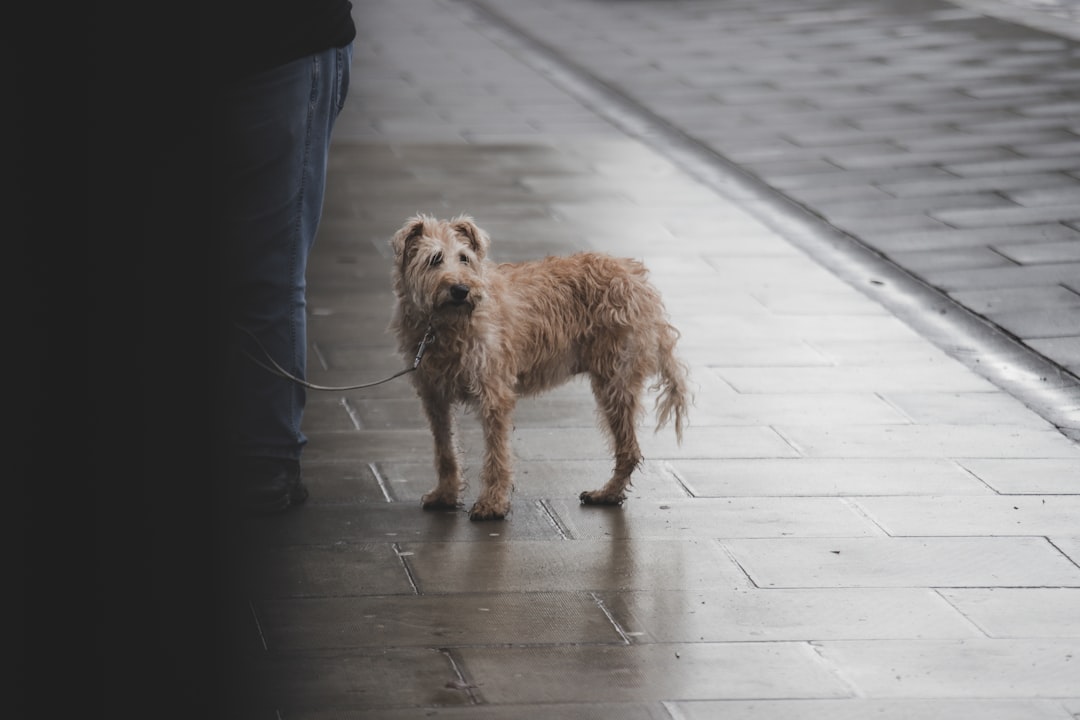
You are standing on the sidewalk, leash in hand, waiting for your dog to move forward. He plants his feet. His ears flatten. His body goes rigid. You tug gently, then firmly, then you stop pulling because you know that just makes it worse. You stand there, feeling foolish, while a stranger walks by and gives you that look. The look that says, ‘Your dog is just being difficult.’ But your dog isn’t being difficult. He is stuck. His nervous system has hit a hard stop, and no amount of gentle encouragement is going to unstick him.
This is canine catatonia, also known as freeze frame or shutdown. It is not a lack of training. It is a specific neurological event where the dog’s brain perceives a threat so overwhelming that it bypasses the fight-or-flight response entirely and drops into a state of tonic immobility. To the untrained eye, it looks like disobedience. To anyone who understands canine neurobiology, it looks like a system crash.
Understanding this distinction is the difference between forcing a dog into a panic and actually helping him move forward. When you treat a freeze as a behavioral choice, you escalate the problem. When you treat it as a physiological state, you can navigate around it.
What Actually Happens in the Brain During a Freeze
When a dog encounters a trigger that exceeds his coping threshold, his brain initiates a cascade of survival responses. The amygdala, the brain’s threat-detection center, screams ‘danger.’ The hypothalamus activates the autonomic nervous system. In most cases, this triggers the sympathetic nervous system, flooding the body with adrenaline and cortisol. The dog runs (flight) or barks, lunges, or snaps (fight). This is the classic reactive dog scenario that most training programs are designed to address.
But what happens when the threat is so severe, or the dog’s capacity to cope is so depleted, that neither fighting nor fleeing seems possible? The brain shifts to the dorsal vagal complex, a primitive survival pathway inherited from our reptilian ancestors. This is the freeze response. It is a last-ditch effort to survive by playing dead, to conserve energy, and to avoid further injury. The dog’s heart rate may actually slow down. His muscles lock. He becomes unresponsive to commands, treats, and even physical touch. He is not choosing to ignore you. He is biologically incapable of doing anything else.
This is not a metaphor. It is a documented physiological state. Researchers have studied tonic immobility in many species, from rabbits to primates, and the mechanism is remarkably consistent. The dog’s brain has essentially pulled the emergency brake. The body goes limp, but the muscles remain tense. The eyes may widen or close. The dog may urinate or defecate. He is in a state of profound distress, even if he appears perfectly calm on the outside.
Recognizing this state is the first step in helping your dog. It requires you to look past the behavior and see the biology. When your dog freezes, he is not being ‘bad.’ He is in pain. He is scared. He is overwhelmed. And he needs you to understand that.
The Three Stages of the Freeze
Canine catatonia rarely happens in a vacuum. It is usually the final stage of an escalating sequence of stress signals. If you can learn to recognize the early stages, you can prevent the freeze from ever happening. This is the difference between reacting to a crisis and preventing it.
The first stage is the anxiety phase. The dog’s body language shifts subtly. He may sniff the ground excessively, lick his lips, yawn, or turn his head away. His ears may swivel back. His tail may tuck slightly. He is still mobile, still responsive, but he is processing the threat. This is the window of opportunity. If you can remove the trigger, or create distance, the dog will likely recover. He will shake it off, take a deep breath, and continue on his way. This is the ‘window of tolerance’ that behaviorists talk about. As long as the dog is within this window, he can process the stress and move forward.
The second stage is the struggle phase. The dog’s body becomes rigid. He may stop moving entirely, or he may move in slow motion. His breathing becomes shallow and rapid. He may whine, growl, or snap. He is still fighting the fear, but he is losing the battle. This is the point of no return for many dogs. If you continue to push him, or if the trigger remains, he will cross the threshold into the freeze.
The third stage is the freeze phase. The dog goes completely still. He may collapse to the ground. He may turn his body away from the trigger. He may close his eyes. He is no longer processing the threat. He is ignoring it. He is shutting down. This is the state of tonic immobility. It is a profound physiological shift that can take minutes, hours, or even days to resolve. The dog is not ‘calm.’ He is numb. He is disconnected. He is surviving.
Understanding these three stages changes everything. It means you are no longer dealing with a ‘behavior problem.’ You are dealing with a physiological emergency. And emergencies require a different kind of response.
What Not to Do When Your Dog Freezes
Most well-meaning owners make the same mistakes when their dog freezes. They pull the leash. They use a sharp tone. They offer treats. They try to ‘redirect’ the dog. They do all of these things because they want to help. They want their dog to move forward. They want to get off the sidewalk and go home. But these actions are exactly what the dog’s brain is trying to avoid.
Pulling the leash adds physical pressure to an already overwhelming situation. It tells the dog’s brain that the threat is real and that he cannot escape it. It reinforces the freeze. Using a sharp tone adds auditory stress. It tells the dog’s brain that he is in trouble. Offering treats adds cognitive load. It tells the dog’s brain that he needs to make a decision. Trying to ‘redirect’ the dog adds confusion.
Every one of these actions is well-intentioned. Every one of them is wrong. When your dog freezes, the only thing you should do is stop. Stop pulling. Stop talking. Stop moving. Give him space. Give him time. Give him the freedom to choose. This is not passive. This is active. This is the most powerful thing you can do.
Think of it this way. If you were standing on a sidewalk, terrified, and someone kept pulling you forward, shouting at you, offering you candy, and trying to make you move, what would you do? You would freeze. You would shut down. You would stop responding. That is what your dog is doing. He is not being difficult. He is being human. Or rather, he being dog.
The Protocol for Unfreezing
So, what do you do? How do you help your dog move forward without triggering another freeze? The answer is simple, but it requires patience. It requires you to trust your dog’s biology. It requires you to let go of your agenda. And it requires you to accept that sometimes, the walk is not about getting somewhere. It is about being together.
Step 1: Stop and Create Space. The moment your dog freezes, stop moving. Do not pull the leash. Do not tug. Do not nudge. Just stop. Stand still. Breathe. Let the dog know that you are not a threat. Let the dog know that you are not going to force him. This is the most important step. It is the foundation of everything else. Without it, nothing else works.
Step 2: Wait. Do not rush. Do not check your phone. Do not sigh. Do not look at the trigger. Just wait. Let the dog’s nervous system regulate. Let the adrenaline clear. Let the cortisol drop. This can take seconds. It can take minutes. It can take hours. Let it take as long as it takes. Your job is not to make the dog move. Your job is to be present. Your job is to be safe. Your job is to be a calm, steady presence in a chaotic world.
Step 3: Offer an Exit. Once the dog’s body begins to relax, once he takes a deep breath, once he shifts his weight, you can offer an exit. Do not pull. Do not tug. Do not command. Just turn your body away from the trigger. Take a step back. Let the dog follow. If he does, great. If he does not, wait. Offer the exit again. And again. And again. Until he chooses to move. This is not manipulation. This is partnership. This is respect. This is what training should be.
Step 4: Celebrate the Choice. When the dog moves, celebrate it. Not with treats. Not with praise. But with a gentle scratch behind the ears. A soft word. A quiet ‘good boy.’ Let the dog know that moving forward was his choice. Let the dog know that he is safe. Let the dog know that he is loved. This is the positive reinforcement that actually works. It is about rewarding choice. It is about building trust. It is about building a relationship.
Preventing the Freeze Before It Happens
The best way to deal with a freeze is to prevent it from happening in the first place. This requires you to understand your dog’s triggers. It requires you to know his limits. It requires you to be proactive, not reactive. And it requires you to be willing to change your plans.
Start by keeping a journal. Write down every time your dog freezes. Note the location. Note the trigger. Note the time of day. Note the weather. Note what your dog was doing before the freeze. Look for patterns. You will likely find that your dog freezes in specific situations, at specific times, or with specific triggers. Once you know the patterns, you can avoid them. You can change your route. You can change your schedule. You can change your expectations. You can change your life to fit your dog, not the other way around.
Work on building your dog’s confidence. This is not about exposing him to more triggers. This is about exposing him to more positive experiences. Take him to new places. Let him explore. Let him sniff. Let him be a dog. Build his trust in you. Build his trust in the world. Build his trust in himself. This is the foundation of a happy, confident dog. This is the foundation of a dog who does not freeze.
Finally, accept that some dogs will never be ‘normal.’ Some dogs will always be sensitive. Some dogs will always be reactive. Some dogs will always freeze. And that is okay. You do not need to fix your dog. You do not need to change your dog. You do not need to make your dog ‘better.’ You just need to love your dog. You just need to accept your dog. You just need to be with your dog. And that is enough.
The freeze is not a failure. It is a signal. It is a cry for help. It is a plea for understanding. Listen to it. Honor it. Respect it. And your dog will thank you for it. Not with a perfect walk. Not with a perfect behavior. But with a life lived in safety, in trust, and in love. And that is the only thing that matters.
Sources & Further Reading
- Understanding Tonic Immobility in Dogs: The Freeze Response — ASPCA
- The Freeze Response: Understanding and Managing Fear in Dogs — Veterinary Partner
- Fear Free Handling: Reducing Fear and Anxiety in Dogs — Fear Free Pets
Photo by atelierbyvineeth … on Unsplash.