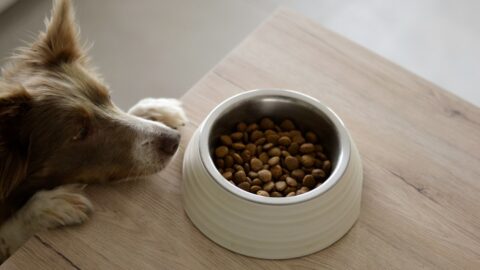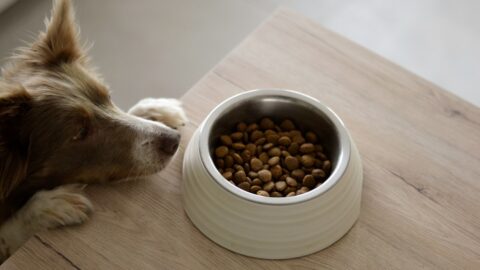

You’re standing in the pet store aisle, bag in each hand, and you pick the grain-free one. Of course you do. The label says “ancestral diet.” The front panel shows a wolf mid-stride across a tundra. There’s no corn, no wheat, no “fillers.” It costs more, which must mean something. You put the other bag back and feel like a responsible dog owner. Then, a few years later, you hear that the FDA is investigating grain-free dog food and heart disease, and you feel a cold knot in your stomach.
Here is what you actually need to know, and it’s more complicated, more honest, and ultimately more useful than either the fear-mongering or the industry reassurances you’ve probably already encountered.
The Signal That Started Everything
In 2018, the U.S. Food and Drug Administration began a formal investigation into a potential link between certain dog foods and a heart condition called dilated cardiomyopathy, or DCM. DCM is a disease where the heart muscle weakens and the chambers enlarge, reducing the organ’s ability to pump blood effectively. In severe cases it causes congestive heart failure and death.
What made the FDA sit up was a pattern cardiologists were noticing in their patients. Dogs were showing up with DCM who didn’t belong there genetically. Certain breeds carry a well-established hereditary predisposition to DCM: Doberman Pinschers, Great Danes, Boxers, Irish Wolfhounds, and a handful of others. But the dogs walking into cardiology clinics with enlarged, failing hearts increasingly included Golden Retrievers, Labrador Retrievers, Miniature Schnauzers, Shih Tzus, and mixed breeds. These are not DCM breeds. That pattern was the signal.
A closer look at the affected dogs’ diet histories showed a striking cluster: a high proportion had been eating grain-free foods, and specifically foods with legumes (peas, lentils, chickpeas, beans) or potatoes listed prominently in the ingredient list, often as the first or second ingredient after the named protein.
By July 2019, the FDA had published a detailed report naming 16 brands associated with the highest number of DCM cases. The list included several premium, boutique, and “ancestral diet” brands that had marketed themselves precisely on the absence of grains. The agency was careful to frame this as an investigation, not a recall, and explicit that causation had not been established. But the signal was strong enough to warrant public disclosure.
The Taurine Hypothesis (and Why It’s Not the Whole Story)
The leading hypothesis that emerged involved taurine, an amino acid that dogs can synthesize from two precursor amino acids: methionine and cysteine. Unlike cats, who require taurine directly from their diet (they’ve lost the enzymatic ability to make it), dogs manufacture their own. In theory, a nutritionally complete dog food shouldn’t produce taurine deficiency in a healthy dog.
In practice, several affected dogs tested taurine-deficient in their blood. And when some of them were switched off the grain-free food and given taurine supplementation, their DCM improved or even partially reversed. That partial reversibility was important: it suggested that at least some of these cases weren’t genetic. Something in the diet was interfering with the dog’s ability to produce or absorb taurine.
The question is what. And here the science gets genuinely murky.
One leading possibility involves the bioavailability of amino acids in legume-heavy diets. Peas and lentils are high in fiber and contain compounds that may interfere with how efficiently dogs digest and absorb the proteins they eat. If protein digestibility drops, so does the supply of methionine and cysteine available for taurine synthesis. A dog eating a food that looks protein-rich on the label might still end up with a functional amino acid shortfall.
Another hypothesis involves dietary fiber interacting with bile acids in the gut in ways that disrupt taurine recycling. A third points to the possibility that legume proteins specifically have a different amino acid composition than meat proteins, meaning they provide less methionine and cysteine gram for gram. These three explanations are not mutually exclusive. All three may be partially true simultaneously, operating across different dog sizes, breeds, and individual metabolisms.
What the research has not found, as of the time this article was written, is a clean, simple mechanism. The FDA’s investigation did not identify a single ingredient, toxin, or contaminant that causes DCM. The World Small Animal Veterinary Association (WSAVA) and the American College of Veterinary Internal Medicine (ACVIM) have both issued position statements acknowledging the concern while emphasizing that the causal pathway remains unproven.
Grain-Free Dog Food and Heart Disease: The Evidence, Honestly Assessed
Saying “grain-free dog food and heart disease are linked” and saying “grain-free dog food causes DCM” are two different claims, and conflating them has caused enormous confusion.
The honest summary of the evidence looks like this:
- An epidemiological association exists between certain grain-free, legume-heavy diets and DCM diagnoses in dogs not genetically predisposed to the disease.
- Some affected dogs improved when switched to grain-inclusive diets and/or given taurine supplementation.
- No controlled study has yet demonstrated that feeding a grain-free diet to a healthy dog of a non-susceptible breed causes DCM at a population level.
- Grain content itself is almost certainly not the direct variable. The FDA’s concern centers on what replaces grains, specifically high levels of peas, lentils, and potatoes, not on the absence of wheat or corn per se.
- The number of reported DCM cases, while large enough to flag, represents a small fraction of the total dogs eating these diets. Most dogs on grain-free foods do not develop DCM.
Tufts University’s Cummings Veterinary Medical Center has been one of the most consistent voices urging caution. Lisa Freeman, DVM, PhD, a board-certified veterinary nutritionist at Tufts and one of the researchers who helped bring this issue to public attention, has written directly about the limits of the evidence while still recommending that owners choose diets that meet WSAVA nutritional guidelines and are made by companies that employ full-time veterinary nutritionists and conduct feeding trials.
That last point is worth sitting with. A feeding trial, in which real dogs are fed the actual food over an extended period and monitored for health outcomes, is a fundamentally different standard than simply verifying that the nutrient content of a food meets a chemical profile. The AAFCO (Association of American Feed Control Officials) nutritional adequacy statement on a bag can be met either through a feeding trial or through a laboratory analysis. Many boutique and grain-free brands have chosen the laboratory route, which is cheaper and faster but tells you nothing about how a real dog metabolizes that particular food over time.
What the Wolf Comparison Actually Gets Wrong
The marketing logic behind grain-free diets rests on an evolutionary argument: dogs evolved from wolves, wolves don’t eat grain, therefore dogs don’t need grain and may be harmed by it. This argument is intuitively appealing and almost entirely wrong, for a reason that’s worth understanding directly.
Dogs are not wolves. They are a domesticated species that diverged from a wolf ancestor somewhere between 15,000 and 40,000 years ago, depending on which genetic study you consult. During that domestication process, dogs underwent significant genomic changes. One of the most striking, documented by a 2013 study published in Nature by Erik Axelsson and colleagues at Uppsala University, involved the AMY2B gene, which codes for an enzyme called amylase. Dogs carry far more copies of this gene than wolves do, and they produce substantially more salivary and pancreatic amylase. Amylase breaks down starch. The dogs that coexisted with human agricultural settlements, eating the scraps and refuse of grain-processing communities, were selected for a digestive system that could handle carbohydrates. The wolf comparison, in other words, has it backwards: modern dogs evolved specifically with grains in their dietary history, more so than their wolf ancestors.
This doesn’t mean dogs need grain, or that grain-inclusive diets are superior to grain-free ones in every context. Dogs with genuine grain allergies exist, though they’re less common than food-marketing suggests. The point is that “grain-free is more natural” is a story, not a fact, and it’s a story that has influenced millions of purchasing decisions with essentially no scientific support.
The Breed and Size Variable You Shouldn’t Ignore
Not all dogs appear equally vulnerable to whatever is driving diet-associated DCM. Golden Retrievers were dramatically over-represented in the FDA’s case reports relative to their population size, which suggests either a genetic susceptibility specific to the breed or a purchasing pattern (Golden owners may simply prefer premium grain-free brands at higher rates than other breed owners). The data can’t cleanly distinguish between those explanations.
Large and giant breeds generally face higher baseline DCM risk, so the stakes of a dietary contribution to cardiac stress are higher in a Great Dane or Newfoundland than in a Beagle. Body size also affects taurine metabolism, and some research suggests large breeds synthesize taurine less efficiently than small breeds even under identical dietary conditions.
Working dogs, highly active dogs, and dogs with existing cardiovascular risk factors deserve extra scrutiny here. If your dog is a breed with hereditary cardiac concerns, the calculus shifts further toward choosing a diet made by a company with real nutritional science behind it, regardless of grain content.
A Decision Rule Worth Using
Here is a concrete way to evaluate any dog food that doesn’t require a biochemistry degree: the WSAVA nutritional checklist. The WSAVA recommends choosing foods from companies that employ at least one full-time PhD or board-certified veterinary nutritionist, conduct their own feeding trials (rather than relying solely on laboratory analysis), and publish their nutritional research in peer-reviewed journals. These criteria are publicly applicable. You can call or email any pet food company and ask directly. A company that won’t answer those questions is giving you an answer.
Ingredient lists are less useful than most owners assume. “Peas” listed below several protein sources is a very different situation than “peas” as the first or second ingredient. The percentage of a given ingredient isn’t visible on most labels, which means the list order matters but doesn’t give you quantities. What you can see is the AAFCO statement: look specifically for “complete and balanced as substantiated by feeding trials” rather than “formulated to meet.” The feeding trial language is the meaningful one.
If your dog is currently eating a legume-heavy, grain-free diet and you’re concerned, the reasonable steps are: talk to your veterinarian, ask about a baseline cardiac evaluation if your dog is a larger breed or a Golden Retriever, and consider transitioning to a diet from a company that meets WSAVA criteria. That’s it. You don’t need to panic, and you don’t need to dismiss the concern.
Where the Science Is Headed
Ongoing research is slowly narrowing the uncertainty. Several veterinary cardiology and nutrition departments, including groups at UC Davis and Tufts, have published or are conducting studies specifically measuring taurine levels, cardiac function, and diet composition in affected versus unaffected dogs. These studies are more rigorous than the initial case-report data, and their results will eventually either solidify the causal link or complicate it further.
The honest position, held by most veterinary nutritionists who are neither employed by pet food companies nor trying to generate clicks, is that the evidence justifies caution without justifying panic. The diets most associated with the DCM signal are those in which legumes or potatoes are extremely high on the ingredient list, particularly in foods from boutique companies without robust nutritional science infrastructure. Grain-free diets from major manufacturers that do conduct feeding trials and employ veterinary nutritionists appear in the data at lower rates.
Grain itself has never been the villain. Corn and rice and barley, in appropriate quantities, are digestible and nutritionally useful for dogs. The villain, if there is one, appears to be the specific ingredient substitutions made when grains were removed, combined with a regulatory environment that allowed those substitutions without requiring proof of long-term safety at population scale.
The dog in your house is not a wolf. The bag with the tundra photograph is not automatically the better choice. What’s behind the label matters more than what’s on the front of it, and for that, the WSAVA criteria give you a real test to apply, not just a feeling to act on.