Everyone agrees you should feed your dog kibble. It is convenient, shelf-stable, and the marketing promises a complete nutritional package. Nobody mentions that the industry standard for what ‘complete’ means has been quietly rewritten to prioritize shelf life and manufacturing consistency over biological optimization. The result is a feeding guideline that tells you how to fill a bag, not how to feed a dog.
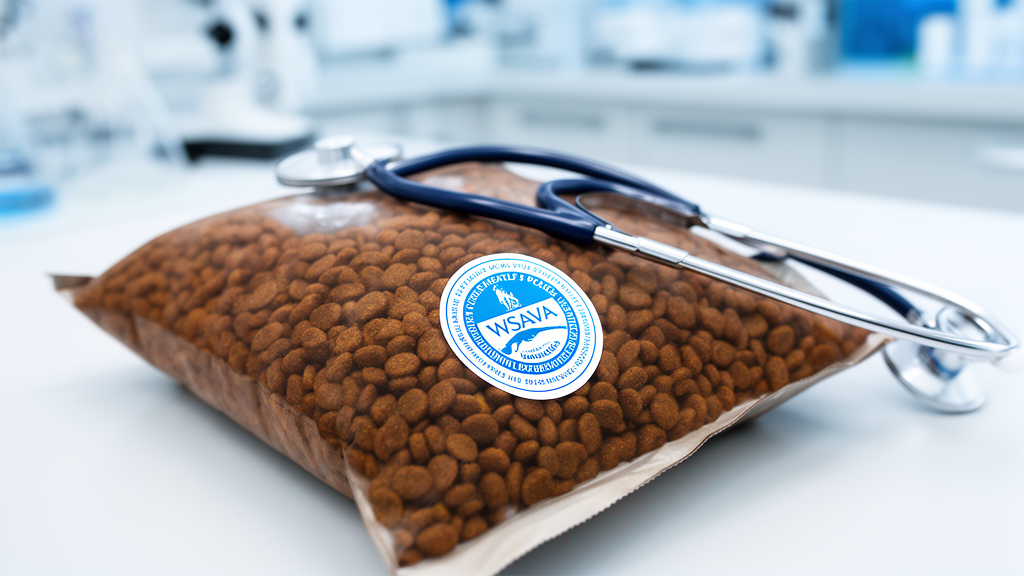
The World Small Animal Veterinary Association (WSAVA) Global Nutrition Committee released a set of guidelines in 2007 to cut through the marketing noise. If you have ever bought premium kibble, you have seen the WSAVA seal on the packaging. It is supposed to mean the food meets rigorous nutritional standards. But the guidelines themselves are not a quality rating system. They are a transparency checklist. Understanding exactly what the WSAVA guidelines ask a manufacturer to prove, and what they deliberately ignore, is the difference between buying a scientifically sound diet and buying a bag of processed filler with a government-adjacent sticker.
When you look at the WSAVA guidelines, you are looking at a specific set of procedural requirements. The committee did not set out to rank foods. They set out to identify manufacturers who could be trusted to provide basic nutritional transparency. To earn the seal, a company must pass four specific checkpoints. First, they must employ a full-time, board-certified veterinary nutritionist (DACVN or DACVIM-Nutrition). Second, they must conduct feeding trials using the AAFCO protocol. Third, they must perform rigorous quality control on raw ingredients and finished products. Fourth, they must provide a phone number for a pet owner to call with questions about their products.
That fourth point is the one most owners miss. The WSAVA seal is not an award. It is a promise of accountability. If a dog has a reaction, or if an owner has a question about the diet, there is a named professional on the other end of the line who is legally and ethically bound to answer. That is the entire scope of the seal. It does not mean the food is the best possible diet. It does not mean the food is biologically optimal. It means the food is safe, the label is accurate, and the company is willing to stand behind it.
What the WSAVA Guidelines Actually Require
The confusion starts with the first checkpoint: the presence of a board-certified veterinary nutritionist. This is a specific credential, not a marketing title. A regular veterinarian cannot sign off on the WSAVA seal. The person must be Diplomate of the American College of Veterinary Nutrition (DACVN) or the American College of Veterinary Internal Medicine (DACVIM-Nutrition). These are post-doctoral certifications that require years of specialized research, peer-reviewed publications, and board examinations.
When a company employs a DACVN, it means they have a scientist on staff who is legally responsible for the nutritional adequacy of every formula they sell. This is a massive shift from the old model, where a single product manager with a marketing degree could design a diet based on what sounded good on a label. The WSAVA guidelines force the company to put a scientist in the room before the product leaves the factory.
The second checkpoint is feeding trials. This is where the guidelines separate themselves from the rest of the industry. Most dog foods on the market are labeled ‘complete and balanced’ based on laboratory analysis of the ingredients. They calculate the protein, fat, and fiber content in a lab, compare it to the AAFCO nutrient profiles, and declare victory. This is called ‘formulation.’ It assumes that if you put the right ingredients in the bowl, the dog will absorb them. Feeding trials prove that assumption.
Under the AAFCO protocol, a company must feed the food to a group of dogs for a full life cycle, usually six months for growth, or nine months for maintenance, and prove that the dogs stay healthy, gain weight appropriately, and maintain normal blood work. This is expensive. It takes time. Most budget brands skip it entirely. The WSAVA guidelines require it. If a food has the seal, you know someone actually fed it to a dog and watched what happened.
Quality control is the third checkpoint. This requires the manufacturer to test raw ingredients before they enter the production line, and to test the finished product before it ships. They must screen for contaminants, verify label claims, and ensure batch-to-batch consistency. This is not optional. It is the baseline for any food that claims to be safe for long-term consumption. The WSAVA guidelines simply make it a requirement for the seal.
Finally, the phone line. This is the accountability mechanism. If a dog owner calls, the company must provide accurate, science-based information. They cannot give generic marketing talking points. They must give specific nutritional advice. This is the part that actually protects the dog. If the food causes a problem, or if the owner is switching diets, there is a named expert who can be held responsible.
What the WSAVA Guidelines Do Not Guarantee
Here is the critical misunderstanding: the WSAVA seal does not mean the food is biologically optimal. It does not mean the food is high in meat. It does not mean the food is free from carbohydrates, fillers, or plant-based proteins. It does not mean the food is the best choice for your specific dog. It only means the food meets the minimum standards for safety, transparency, and accountability.
Many high-end kibble brands carry the WSAVA seal. Some of them are excellent. Some of them are mediocre. The seal does not rank them. It does not compare them. It simply confirms that they passed the four checkpoints. A budget brand that passes the checkpoints is still a budget brand. A premium brand that passes the checkpoints is still a premium brand. The seal does not change the ingredient list. It only changes the oversight.
This is where the ‘yeah, but…’ argument breaks down. The argument assumes that the WSAVA seal is a quality rating. It is not. It is a transparency rating. It tells you that the company is not hiding behind a label. It tells you that a scientist is on the hook. It does not tell you that the food is the best possible diet for your dog. That is a different question. That requires looking at the ingredient list, the protein source, the carbohydrate content, and your dog’s specific health needs.
Consider a dog with a food allergy. The WSAVA seal does not guarantee the food is hypoallergenic. It does not guarantee the food is free from common allergens like chicken or beef. It only guarantees that the company tested the food and found it safe for the general population. If your dog is allergic to chicken, a WSAVA-sealed chicken kibble is still a problem. The seal does not solve allergies. It solves uncertainty.
Consider a dog with kidney disease. The WSAVA seal does not guarantee the food is renal-supportive. It does not guarantee the food has the right phosphorus levels. It only guarantees that the food is nutritionally complete for a healthy dog. If your dog has kidney disease, a WSAVA-sealed maintenance kibble is still a problem. The seal does not solve chronic conditions. It solves marketing claims.
This is the honest limit of the WSAVA guidelines. They are not a magic bullet. They are not a quality rating. They tell you that the company is not lying. They do not tell you that the company is telling the whole truth. That is on you, the owner, to investigate.
How to Use the WSAVA Guidelines as a Filter
If you are shopping for dog food, the WSAVA guidelines are the first filter, not the final answer. Use them to eliminate companies that are hiding behind a label. If a company does not employ a board-certified veterinary nutritionist, does not conduct feeding trials, does not perform quality control, and does not provide a phone line, walk away. Those companies are taking your money and giving you a gamble. The WSAVA seal tells you they are not.
But do not stop there. Once you have a list of WSAVA-sealed foods, look at the ingredient list. Look at the protein source. Look at the carbohydrate content. Look at the price. Look at your dog’s specific health needs. The seal is the floor, not the ceiling. It is the baseline for safety. It is not the benchmark for quality.
For example, if your dog is a high-energy working dog, you might look for a WSAVA-sealed food that is higher in protein and fat. If your dog is a senior with joint issues, you might look for a WSAVA-sealed food that includes glucosamine and chondroitin. The seal does not tell you which one to pick. It only tells you that the one you pick is safe and transparent.
This is the real value of the WSAVA guidelines. They remove the guesswork from the safety equation. They tell you that the food is not going to kill your dog. They tell you that the label is not going to lie to you. That is a massive improvement over the old model, where a single product manager could design a diet based on what sounded good on a label.
The WSAVA Filter Protocol
Most dog owners stop at the seal. They see the sticker, they buy the food, and they move on. This is a mistake. The seal is only the first step. The real work happens after the seal. Here is the WSAVA Filter Protocol, a three-step process to turn the seal into a decision tool.
Step one: Verify the seal. Go to the WSAVA website. Search for the company. Confirm that the company is actually on the list. Many companies use the seal without being on the list. This is called ‘seal fraud.’ It is illegal, but it happens. If the company is not on the list, throw the food back on the shelf.
Step two: Read the ingredient list. Look at the first three ingredients. Are they named protein sources? Or are they ‘meat by-products,’ ‘animal fat,’ or ‘grain meal’? If the first three ingredients are named proteins, the food is likely higher quality. The seal does not change this. It only confirms that the company tested the food and found it safe.
Step three: Match the food to your dog. Look at your dog’s age, weight, activity level, and health status. If your dog is a high-energy working dog, look for a food that is higher in protein and fat.
This protocol turns the WSAVA seal from a marketing sticker into a decision tool. It gives you a clear, actionable way to evaluate dog food. It is a transparency checklist. And it is the best tool you have.
Why This Matters Beyond the Bag
The WSAVA guidelines are not just about your dog. They are about the entire dog food industry. For decades, the industry operated in a black box. Companies could make any claim they wanted, use any ingredient they wanted, and sell any product they wanted. The WSAVA guidelines changed that. They forced transparency. They forced accountability. They forced science into the room.
This is a massive shift. It means that the next time you buy dog food, you are not buying a gamble. You are buying a product that has been tested, verified, and backed by a scientist. You are buying a product that is safe, transparent, and accountable. That is a huge improvement over the old model.
But do not stop at the seal. Use the WSAVA Filter Protocol. Verify the seal. Read the ingredient list. Match the food to your dog.
The WSAVA guidelines are not perfect. They do not solve every problem. They do not guarantee every dog will thrive.