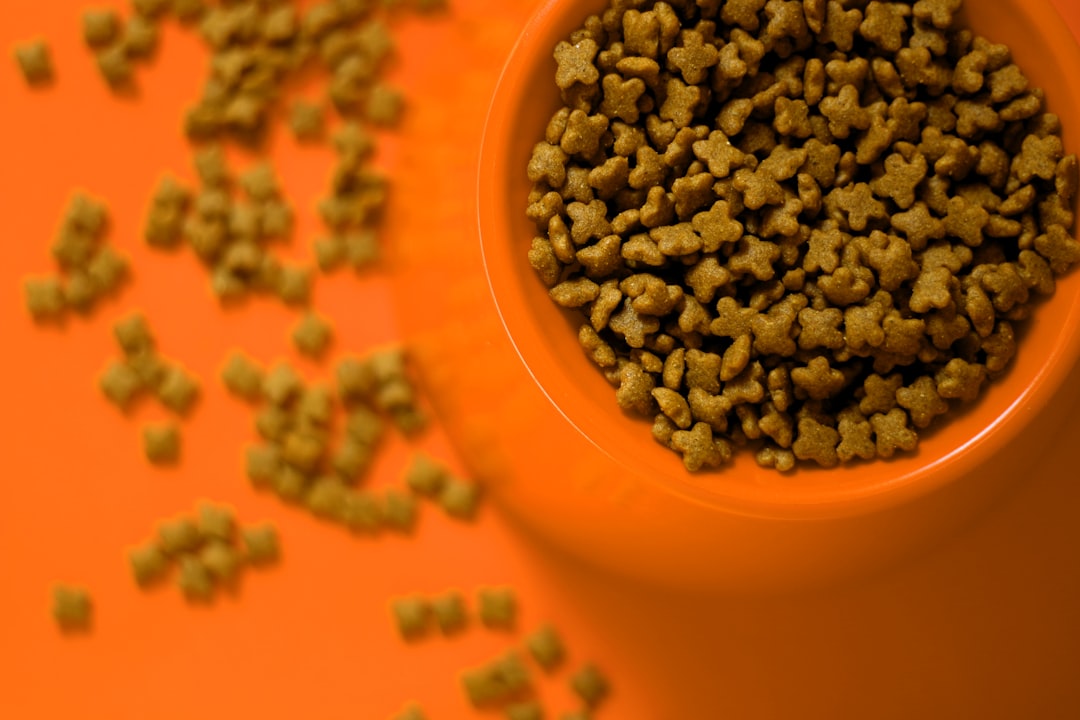
You are standing in the pet store aisle, staring at a bag of kibble that promises “optimal health” and “veterinarian recommended.” The front panel is a wall of marketing noise, but your eyes land on the small black text at the bottom. It reads: “Formulated to meet the nutritional levels established by the AAFCO Dog Food Nutrient Profiles for maintenance.” You feel a small click of relief, like you’ve just checked a box. But that sentence is not a quality seal. It is a legal floor, and it is the single most misunderstood sentence on the entire shelf.
Reading a dog food label is not about finding the perfect food. It is about filtering out the noise to find the actual nutritional baseline. The industry has built a labyrinth of marketing terms designed to distract you from two specific, verifiable standards: the AAFCO nutrient profiles and the WSAVA feeding guidelines. Understanding the difference between these two systems is the only way to stop paying a premium for marketing and start feeding your dog based on evidence.
What the AAFCO Statement Actually Means
When you see the AAFCO statement on a bag, you are looking at a compliance claim, not a quality guarantee. The Association of American Feed Control Officials (AAFCO) does not test dog food. They do not manufacture food. They do not even regulate it directly. What they do is publish a massive, highly technical book of nutrient profiles. These profiles list the minimum and maximum amounts of protein, fat, vitamins, and minerals that a dog needs to survive and stay healthy.
When a manufacturer says their food “meets the nutritional levels established by the AAFCO Dog Food Nutrient Profiles,” they are simply stating that their food contains enough of those specific nutrients to keep a dog alive. It is the nutritional equivalent of a car meeting the minimum speed limit. It does not mean the car is fast, safe, or comfortable. It just means it is moving.
There is a second, equally important part of that sentence that most owners miss. The label will usually specify the life stage the food is formulated for. You will see phrases like “formulated for growth” or “formulated for all life stages.” This is the critical filter. A food formulated for growth must meet much higher protein and fat requirements than a food formulated for maintenance. If you feed a “growth” formula to a senior dog, you are overloading their kidneys with unnecessary protein. If you feed a “maintenance” formula to a growing puppy, you are starving them of the building blocks they need for bone and muscle development.
The word “formulated” is doing the heavy lifting here. It means the manufacturer mixed the ingredients in specific ratios to hit those numbers. It does not mean they tested the final product in a lab to prove it actually contains those numbers. They calculated it on paper. This distinction is vital. A food can be formulated to meet AAFCO standards but still be made with ingredients that are difficult for your dog to digest.
The WSAVA Seal: A Transparency Checklist
If AAFCO is the floor, the World Small Animal Veterinary Association (WSAVA) guidelines are the checklist that tells you how seriously the manufacturer takes their craft. The WSAVA does not set nutrient numbers. Instead, they set standards for how a company operates. To earn the WSAVA seal, a company must pass a specific set of transparency requirements.
First, the company must employ a full-time, board-certified veterinary nutritionist. This is not a marketing consultant. It is a doctor who has completed a specialized residency in animal nutrition. Second, the company must conduct feeding trials. This means they actually feed the food to real dogs over a set period and monitor their health, rather than just relying on computer models to predict nutritional value. Third, the company must allow independent laboratory testing of their final product to verify that the nutrient levels match what is on the label.
When you see the WSAVA seal, you are looking at a company that has opened its books. They are telling you, “We have a nutritionist on staff, we test our food on real dogs, and we let independent labs check our work.” This is a massive signal of quality. It means the company is willing to be held accountable by the scientific community. However, the seal is not a guarantee that the food is “healthy” in a broader sense. It is a guarantee that the company is honest about what they are doing.
Many premium brands do not seek the WSAVA seal because the application process is rigorous, expensive, and time-consuming. A small, family-owned company might make an exceptional food but lack the resources to navigate the WSAVA application. Conversely, a massive corporation might pay for the seal while using lower-quality ingredients. The seal is a transparency tool, not a quality rating. It tells you the company is playing by the rules, but it does not tell you if the ingredients are premium or budget.
How to Read the Ingredient List
Once you understand the AAFCO statement and the WSAVA seal, you can move to the ingredient list. This is where the marketing distractions are most potent. You will see words like “natural,” “human-grade,” and “holistic.” These words are largely unregulated. “Natural” simply means the food does not contain artificial colors, flavors, or preservatives. It says nothing about the quality of the meat. “Human-grade” means the ingredients could be eaten by a human, but it does not mean the entire final product is human-grade. A bag of kibble can be labeled “human-grade” if the individual ingredients met the standard at some point in the manufacturing process.
Instead of focusing on the marketing terms, focus on the ingredient list itself. The first ingredient should be a named meat source, such as “chicken” or “salmon.” If the first ingredient is “chicken meal,” that is actually a concentrated source of protein. Chicken meal is made by removing the water from chicken, leaving behind a dense protein source. It is not inherently bad. The problem arises when the first ingredient is a vague term like “meat by-products” or “animal fat.” These terms allow the manufacturer to use whatever scraps they can get their hands on, without disclosing the specific source.
Look for named meals. “Chicken meal” is a high-quality protein source. “Poultry by-product meal” is a vague mix of organs and bones. Look for named vegetables. “Sweet potatoes” are a good source of fiber and carbohydrates. “Corn gluten meal” is a cheap filler that provides very little nutritional value to dogs. The goal is to find a food where the first five ingredients are recognizable, named sources of protein, fat, and fiber.
Marketing Distractions to Ignore
The pet food industry spends billions on marketing to distract you from the actual nutritional content. You will see claims like “grain-free,” “high protein,” and “super premium.” These terms are designed to trigger emotional responses, not rational ones. “Grain-free” implies that grains are bad for dogs. There is no scientific evidence that grains are inherently harmful to dogs. In fact, grains like rice and oats are excellent sources of digestible carbohydrates and fiber. The FDA investigation into Dilated Cardiomyopathy (DCM) linked grain-free diets to heart disease in some dogs, largely due to taurine deficiency caused by certain legume-heavy formulas. Avoiding grains is not a health benefit unless your dog has a specific, diagnosed allergy.
“High protein” is another marketing trap. Dogs do not need excessive protein. Their bodies cannot store excess protein, so any amount above their nutritional requirement is simply broken down and excreted as waste. This puts unnecessary stress on the kidneys and liver. A food with 40% protein is not necessarily healthier than a food with 25% protein. The quality of the protein matters far more than the quantity.
“Super premium” is a completely unregulated term. It means nothing. It is a marketing invention designed to make you feel like you are buying a luxury product. A food labeled “super premium” can be nutritionally identical to a food labeled “standard.” The only way to know the difference is to read the ingredient list and the AAFCO statement.
Putting It All Together
Reading a dog food label is a process of elimination. Start with the AAFCO statement. Ensure the food is formulated for your dog’s specific life stage. Look for the WSAVA seal to verify that the company is transparent and employs a veterinary nutritionist. Scan the ingredient list for named meat sources and named vegetables. Ignore the marketing distractions on the front of the bag.
This approach strips away the noise and leaves you with the facts. It allows you to make a decision based on evidence, not emotion. It empowers you to find a food that is nutritionally sound, transparent, and appropriate for your dog’s specific needs. The goal is not to find the “best” food. The goal is to find the most honest food. In a market flooded with distractions, honesty is the rarest ingredient of all.
When you stop looking for magic bullets and start looking for transparency, you will find that feeding your dog well is not complicated. It is simply a matter of reading the label, understanding the standards, and ignoring the noise. Your dog does not care about the marketing. They care about the nutrition. Focus on what matters.
Sources & Further Reading
- AAFCO Official Publication: Dog Food Nutrient Profiles — Association of American Feed Control Officials
- WSAVA Global Nutrition Committee: Guidelines for Determining the Quality of Dog and Cat Foods — World Small Animal Veterinary Association
- FDA Update on Dilated Cardiomyopathy (DCM) in Dogs — U.S. Food and Drug Administration
Photo by Daniel Dan on Unsplash.