
You are standing on a sidewalk, your hand is extended, and your voice is clear. The dog is three yards away, tail high, ears forward, and completely ignoring you. You call again, louder. The dog looks at you, then at the tree, then back at you, and trots past your outstretched hand. This is not defiance. This is a physics problem.
Most owners believe recall is a motivation issue. They think their dog is choosing to ignore them because the treat isn’t exciting enough, or because the dog is “stubborn.” This is the fundamental error that breaks every training plan before it begins. The dog isn’t ignoring you because they are difficult. The dog is ignoring you because you asked them to solve a cognitive puzzle they cannot solve at that distance.
Learning how to train a dog effectively starts with understanding that attention is not a switch. It is a spectrum. And the first 10 feet of that spectrum are where 90% of training failures occur.
The 10-Foot Attention Threshold
When you ask a dog to come, you are asking them to shift their entire focus from the environment to you. This requires a massive amount of neural processing. The dog must inhibit their current impulse (sniffing, walking, chasing), calculate the spatial relationship between themselves and you, and execute a motor plan to close that distance while maintaining focus.
At three yards, this calculation is trivial. The dog sees you, recognizes the hand signal, and knows the reward. At ten yards, the environment introduces variables: a squirrel, a gust of wind, a distant dog. The cognitive load required to ignore those variables and lock onto you spikes exponentially.
Research into canine attention spans by Alexandra Horowitz at Barnard College demonstrates that dogs are highly sensitive to environmental context. They do not process commands in a vacuum. They process them relative to their immediate sensory field. When you stand ten feet away, you are no longer the primary stimulus. You are a secondary option. The dog is not choosing to ignore you; they are simply processing the world around them, and you are not loud enough in that context.
This is why your dog seems to listen perfectly in the living room but vanishes the moment you step into the yard. The living room has low cognitive load. The yard has high cognitive load. The distance amplifies the load. If you cannot get your dog to look at you from three feet away in a quiet room, you will never get them to come from ten feet away in a park. The skill does not scale with distance. It collapses.
Why Standard Training Fails at Distance
Standard obedience advice tells you to practice recall in increasingly distracting environments. This is backward. You do not build distance by adding distractions. You build distance by mastering proximity.
When you try to teach a dog to come from ten feet away, you are asking them to succeed at the hardest part of the equation before they have mastered the foundation. It is like trying to teach a child to run a marathon before they can walk across the room. The result is failure, followed by frustration, followed by the dog learning that your voice means “stop having fun” or “come face a threat.”
This is the exact mechanism that creates the “stubborn” label. The dog is not stubborn. The dog is confused. They are being asked to perform a complex behavior without the necessary building blocks. Every time they fail, they learn that ignoring you is the easier, safer option. You are not training a dog. You are training them to ignore you.
Service dog training programs understand this implicitly. They do not start with distance. They start with proximity. They build a dog that can lock onto a handler’s face from six inches away before they ever ask for a heel at ten feet. The distance is a byproduct of the focus, not the goal itself.
How to Train a Dog: The Proximity Protocol
To fix this, you must stop asking for distance. You must start asking for focus. The goal of your first training sessions is not to get the dog to move. The goal is to get the dog to look at you.
Start in a room with zero distractions. No toys, no other people, no windows. Stand still. Do not call the dog. Do not lure the dog. Wait. The dog will eventually look at you. The moment their eyes meet yours, mark that behavior with a clicker or a sharp “yes,” and deliver a high-value treat. Do this repeatedly. Ten times. Twenty times. Fifty times.
You are not teaching the dog to come. You are teaching the dog that your eyes are the most interesting thing in the room. You are building the neural pathway that connects your face to their reward system. This is the foundation. Without this, recall is just shouting into a void.
Once the dog is consistently looking at you within three feet, you can begin to add distance. But do not add distance by stepping back. Add distance by taking a single step back, then immediately stepping forward to meet the dog. This keeps the interaction close while gradually increasing the space between you. The dog learns that coming to you is easy, rewarding, and safe.
Gradually, over days or weeks, you can increase the space. But you must never ask for more distance than the dog can handle with 90% success. If they fail, you have asked too much. Step back. Reduce the distance. Increase the reward. Repeat.
Building the Service Dog Standard
Service dog trainers use a concept called “proofing.” This means testing the dog’s behavior in increasingly difficult environments. But proofing is not about distance. It is about consistency. A service dog must be able to focus on its handler regardless of what is happening around them. This is not achieved by throwing the dog into a busy park. It is achieved by slowly, methodically, and patiently building the dog’s ability to ignore distractions while maintaining focus on the handler.
When you train a service dog, you are not just teaching a skill. You are building a partnership. The dog must trust that you will always provide value, safety, and clarity. If you break that trust by asking for impossible behaviors, the partnership fractures. The dog stops trying. The dog stops looking. The dog stops caring.
This is why learning how to train a dog requires patience. It requires you to slow down. It requires you to accept that the first 10 feet are the most important 10 feet in your dog’s life. Master them, and everything else becomes easy. Skip them, and you will spend the rest of your life chasing a dog that no longer listens.
The Honest Limits of Proximity Training
Proximity training is not a magic bullet. It does not work for every dog. Dogs with severe trauma histories, dogs with neurological conditions, and dogs with extreme prey drives may require specialized interventions beyond standard proximity work. If your dog is reacting aggressively or showing signs of severe anxiety, proximity training alone will not solve the problem. You will need the guidance of a certified behavior consultant or a veterinary behaviorist.
Furthermore, proximity training assumes a healthy, mobile dog. Senior dogs with arthritis or dogs with mobility issues may struggle with the physical act of closing distance, even if they understand the command. In these cases, you must adapt the training to their physical capabilities, focusing on eye contact and subtle body language rather than physical movement.
Finally, proximity training is not a substitute for exercise. A dog that is physically and mentally exhausted will struggle to focus, regardless of how close you are. Ensure your dog is getting adequate exercise and mental stimulation before you begin training sessions. A tired dog is a focused dog. An under-exercised dog is a distracted dog.
Why This Matters Beyond Recall
Learning how to train a dog using the proximity protocol does more than fix recall. It changes the entire relationship between you and your dog. It shifts the dynamic from one of control to one of partnership. It teaches the dog that you are a source of value, not a source of stress. It teaches the dog that looking at you is the best thing they can do.
This is the foundation of every other skill. Loose-leash walking. Sit. Stay. Down. Come. All of these skills rely on the same neural pathway: the connection between the dog’s focus and your presence. If that connection is weak, the skills will fail. If that connection is strong, the skills will flourish.
When you master the first 10 feet, you are not just teaching your dog to come. You are teaching them to trust you. And that is the most important skill of all.
Sources & Further Reading
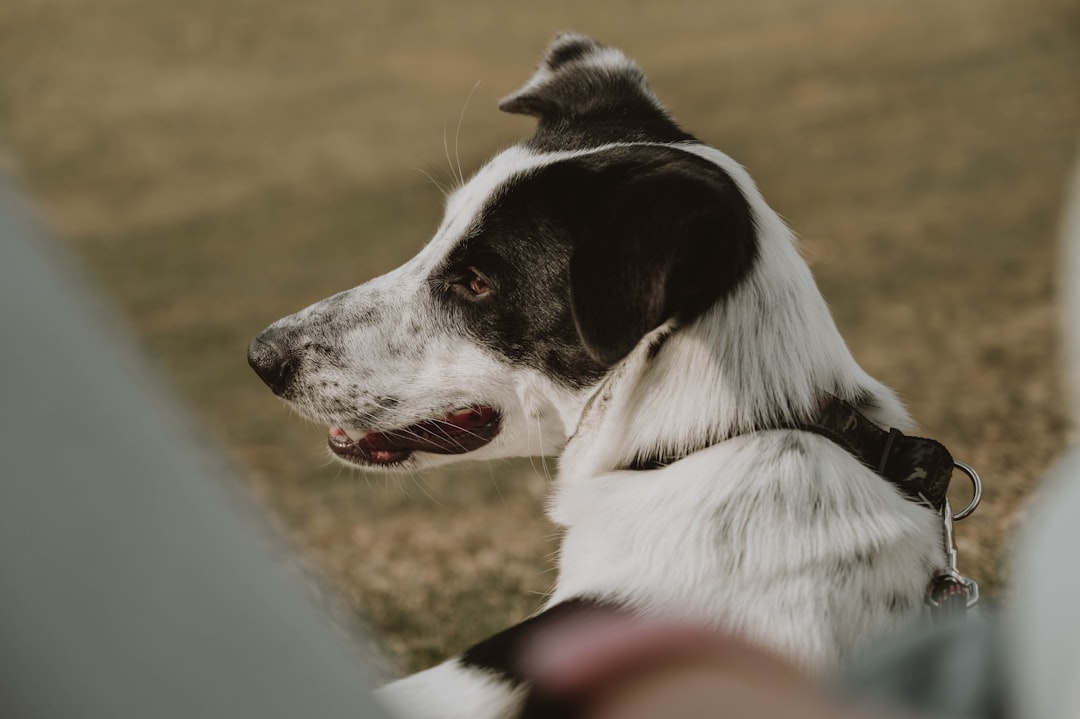
Photo by Virginia Marinova on Unsplash.