You open the laundry hamper and a cloud of fur floats up into the light, catching the morning sun like a slow-motion snowstorm. You brush your dog, but the brush comes away clogged with undercoat, and the shedding doesn’t stop. It’s not just a messy season. It’s a biological reset that happens to every double-coated breed, and if you brush it wrong, you’re actually making the problem worse.
Here is the truth about seasonal shedding: it is not a sign of poor health, and it is not a sign that your dog’s diet is failing. It is a predictable, hormonally driven molt triggered by changes in daylight, not temperature. But because most owners treat it like a nuisance to be hacked away with cheap tools, they end up with a dog that looks patchy, feels rough, and sheds even more. The solution is not to fight the coat. It is to understand the double-coat architecture and reset it correctly.
The Double-Coat Architecture: Guard Hairs vs. Undercoat
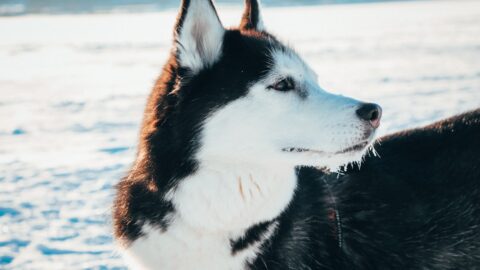
To understand why your dog sheds, you have to understand the two distinct types of hair growing on its skin. A double-coated dog, breeds like the Golden Retriever, Siberian Husky, German Shepherd, and Samoyed, has an outer layer of guard hairs and an inner layer of undercoat.
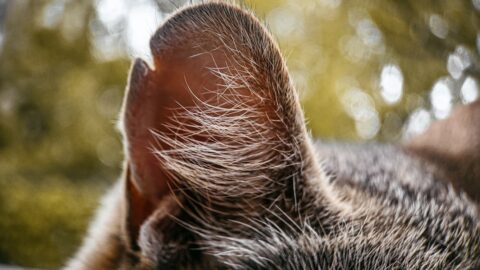
The guard hairs are longer, coarser, and water-resistant. They are the weatherproof shell that protects the skin from UV rays, burrs, and abrasion. The undercoat is short, dense, and incredibly soft. It is the thermal insulation layer, designed to trap air and keep the dog warm in winter and cool in summer.
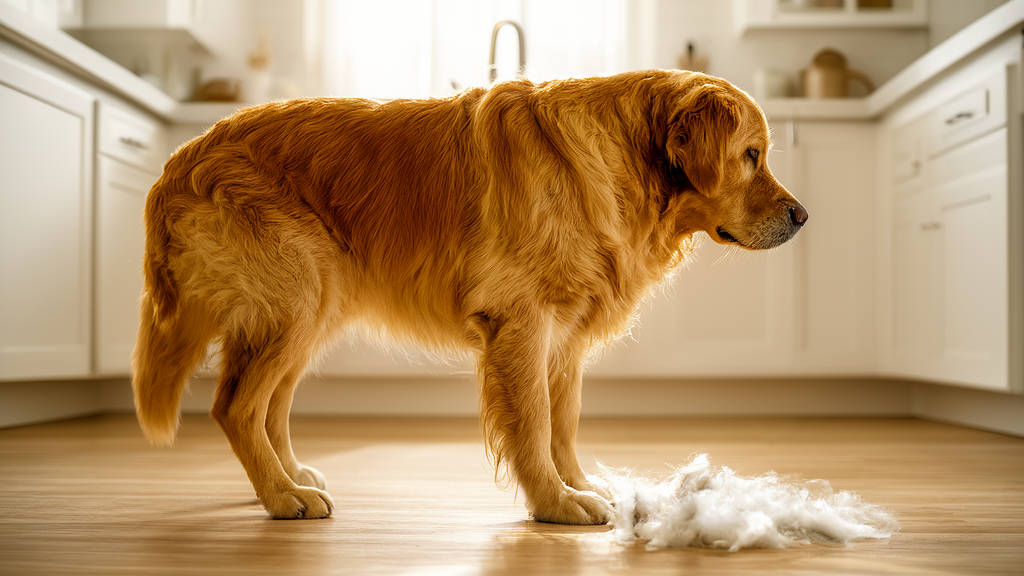
When spring arrives, the increasing daylight triggers a hormonal shift. The dog’s body stops producing the thick winter undercoat and begins shedding it out in massive quantities so the guard hairs can take over as the primary insulation layer for the warmer months. This is why your dog looks fluffy and round in January, then looks like it is losing its mind in April. The undercoat is literally falling out.
Most owners see this massive shedding event and grab whatever brush they have lying around. This is where the damage begins.
The Wrong Tools Make Shedding Worse
If you use a standard bristle brush or a cheap pin brush on a double-coated dog during a heavy shed, you are only removing the top layer of loose guard hairs. The dense undercoat remains trapped against the skin. This trapped undercoat does two things: it blocks air circulation against the skin, and it creates a matted, humid environment that leads to hot spots and skin infections.
Worse, if you use a blade-style deshedding tool incorrectly, you risk cutting the guard hairs or nicking the skin. The skin of a double-coated dog is thinner and more sensitive than most owners realize, and a single nick can turn a manageable shed into a bleeding, infected mess.
The right tool for a double-coat reset is a high-quality undercoat rake or a slicker brush used with extreme care. An undercoat rake has long, widely spaced teeth designed to reach through the guard hairs and grab the dead undercoat at the root. A slicker brush, when used in short, gentle strokes, can lift the undercoat without damaging the skin. The goal is not to shave the dog down to the skin. The goal is to remove the dead insulation so the new guard hairs can grow in properly.
The Double-Coat Reset Protocol
Once a year, typically in early spring, double-coated dogs undergo a massive molt known as “blowing their coat.” This is when the entire winter undercoat is shed out in large clumps over the course of two to four weeks. During this reset, your dog will shed more than at any other time of the year, and your furniture will suffer.
Here is the exact protocol to manage the reset without damaging the coat:
- Step 1: Pre-wash with a moisturizing conditioner. Dry brushing a matted coat is painful and damages the hair shaft. Wetting the coat first opens the hair cuticles and allows the brush to glide through the undercoat without pulling the skin.
- Step 2: Use an undercoat rake in short, controlled strokes. Work in small sections, starting from the neck and moving toward the tail. Do not press hard. Let the teeth of the rake do the work. You will see massive clumps of undercoat coming out. This is normal.
- Step 3: Follow with a slicker brush to lift remaining loose hair. After the rake has done the heavy lifting, use a slicker brush in short, light strokes to catch any remaining loose hairs. Be careful around thin-skinned areas like the belly and armpits.
- Step 4: Finish with a rubber grooming mitt or curry brush. This final step removes the finest loose hairs and stimulates the skin. It is also a great bonding moment, turning a stressful grooming session into a positive interaction.
Do not skip the conditioning step. Many owners skip it to save time, but skipping it is the fastest way to end up with a tangled, painful mess that requires professional stripping later in the season.
When to Worry: Hot Spots and Skin Infections
Shedding itself is not a medical issue. It is a biological process. But when the undercoat is trapped against the skin, it creates a perfect environment for bacterial and fungal overgrowth. This is called a hot spot, or acute moist dermatitis.
Hot spots appear as red, inflamed, moist patches of skin, often covered in a crusty scab. They can develop overnight and are incredibly painful for the dog. If you notice a hot spot, stop brushing the area immediately and consult your veterinarian. Hot spots require medical treatment, usually involving antibiotics and anti-inflammatory medication, and they will not heal if you continue to brush over them.
Other signs that your dog’s shedding has crossed into a medical issue include excessive scratching, bald patches, a foul odor coming from the skin, or lethargy. If your dog is shedding heavily year-round, rather than just seasonally, it could be a sign of allergies, thyroid issues, or Cushing’s disease. In these cases, a vet visit is necessary to rule out underlying health problems.
The Honest Limits: When You Should Not Brush
There are times when brushing a double-coated dog is actively harmful. If your dog has active hot spots, open sores, or severe matting, do not attempt to brush it out at home. Matting pulls on the skin and causes micro-tears that lead to infection. Severe matting requires professional stripping by a groomer or veterinarian, and attempting to brush it out yourself will only cause pain and damage.
Additionally, never shave a double-coated dog to “help” with shedding. The guard hairs provide essential UV protection and help regulate body temperature. Shaving them off leaves the dog vulnerable to sunburn, heatstroke, and permanent coat damage. Some double-coated breeds, like Pomeranians and Huskies, can suffer from post-clipping alopecia, where the coat fails to grow back correctly after being shaved. The coat may grow back patchy, wiry, or not at all. The grooming industry has known this for decades, but the myth persists because it is an easy upsell for inexperienced groomers.
If your dog is matting badly, focus on keeping the coat clean and conditioned, and bring them to a professional groomer who specializes in double coats. Do not attempt to shave them out of frustration.
What This Means for Your Dog’s Comfort
Understanding the double-coat reset changes how you view your dog’s shedding. It is not a nuisance to be fought. It is a biological process that, when managed correctly, keeps your dog comfortable and healthy through the changing seasons. By using the right tools and following the reset protocol, you prevent hot spots, maintain skin health, and keep your furniture relatively intact. The goal is not to stop the shedding. The goal is to help your dog shed efficiently, so they stay cool in the summer and warm in the winter, without the skin problems that come from trapped, dead insulation.