Most dog owners clean their ears by pouring liquid into the outer opening and massaging the base. They assume the liquid travels down a straight tube, like a hallway, and washes out the debris. It doesn’t. The anatomy of a dog’s ear is an L-shape. The vertical canal drops down, turns ninety degrees, and runs horizontally before reaching the eardrum. When you clean a dog’s ear the way you clean your own, you are not washing the canal. You are pushing debris, wax, and moisture deeper into that horizontal pocket, creating a sealed environment where bacteria thrive.
This is not a theoretical concern. It is the primary reason why ear infections in breeds like Cocker Spaniels, Golden Retrievers, and Bloodhounds are so persistent. The vertical canal is easy to see and easy to reach. The horizontal canal is a blind spot. If you cannot see past the bend, you cannot clean past the bend. The solution is not a stronger cleaner or a more vigorous massage. The solution is understanding the geometry of the trap and working with it.
The Anatomy of the Trap
To understand why your cleaning routine fails, you have to look at the ear from the inside out. The external ear canal consists of two distinct sections: the vertical canal and the horizontal canal. The vertical canal is the outer funnel that catches sound waves and debris. It is relatively wide and straight. The horizontal canal, however, is a narrow, winding tunnel that runs parallel to the skull before curving back up to meet the tympanic membrane (the eardrum).
Think of the vertical canal as the hallway of a house and the horizontal canal as the closet at the end. When you pour ear cleaner into the opening, the liquid travels down the hallway and splashes into the closet. If you do not actively lift the horizontal flap of the ear to straighten the L, the liquid pools at the bottom of that horizontal tunnel. It does not flow back out the way it came. It sits there, mixing with wax and dead skin cells, creating a warm, dark, stagnant swamp. That swamp is the perfect breeding ground for the bacteria and yeast that cause chronic otitis externa.
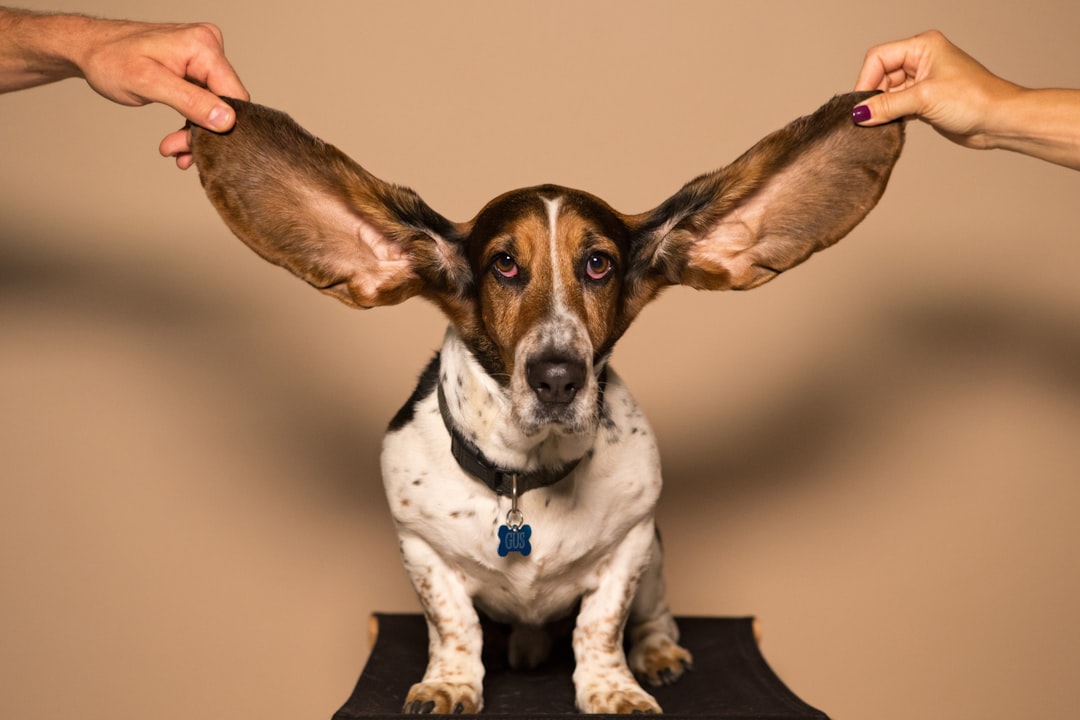
This anatomical reality explains why some dogs are prone to infections while others are not. Breeds with floppy ears, such as the Cocker Spaniel, English Setter, and Bloodhound, have a double disadvantage. Their heavy pinnae (the outer ear flap) seal the opening of the vertical canal, blocking airflow and trapping heat. But even a breed with erect ears, like a German Shepherd or a Border Collie, has this L-shaped anatomy. They are not immune to the geometry. They are only immune to the moisture-trapping effect of the floppy pinna.
Why Standard Cleaning Fails
The standard cleaning method taught to most owners is to pour a liquid solution into the ear, massage the base of the ear for thirty seconds, and let the dog shake its head. This method assumes that the shaking will flush the debris out of the horizontal canal. It does not. The shaking force is strongest at the base of the vertical canal. It sends the liquid and the suspended debris back up the vertical tube, but it rarely dislodges the sticky wax and biofilm that have adhered to the walls of the horizontal tunnel.
Furthermore, massaging the base of the ear while the canal is closed can actually push debris deeper. If there is already a blockage of wax or inflammation in the horizontal canal, the massage acts like a plunger, driving the contaminants against the eardrum. This causes pain, swelling, and further inflammation, which narrows the canal even more. The result is a cycle of infection that seems to come back no matter how often you clean it. The cleaning is not failing because the product is weak. It is failing because the product never reaches the problem area.
The Straightening Technique
The fix is mechanical, not chemical. You must physically straighten the L-shape to allow the cleaning solution to flow through the horizontal canal and wash out the debris. This requires a specific hand placement that most owners never learn.
Start by lifting the pinna (the outer ear flap) straight up. This opens the vertical canal. Next, rotate the pinna backward and outward, pulling it away from the head. This motion straightens the bend at the junction of the vertical and horizontal canals. You are essentially turning the L into a straight line. Once the canal is straightened, you can pour the cleaning solution directly into the horizontal tunnel. The liquid will flow all the way to the eardrum and back out, carrying the debris with it.
After pouring the solution, you do not need to massage the base of the ear vigorously. A gentle circular motion at the base is enough to help the solution penetrate the bend. The real work happens when you let the dog shake its head. With the canal straightened, the shaking force is distributed evenly along the entire length of the tunnel, flushing out the horizontal pocket. If you skip the straightening step, you are wasting the cleaner and risking pushing the infection deeper.
When to Stop and Call the Vet
There is a hard limit to what you can clean at home. If the ear is red, swollen, hot to the touch, or if your dog is shaking its head violently or scratching at the ear, you have reached the inflammatory phase. At this point, the canal is so swollen that it is effectively closed. No amount of cleaning solution will penetrate the blockage. Attempting to clean an inflamed ear can cause pain, micro-tears, and even rupture the eardrum if the swelling is severe.
If you see discharge that is dark, brown, or coffee-ground-like, you are likely dealing with yeast (Malassezia), which requires a specific antifungal medication. If the discharge is yellow or green, you are likely dealing with a bacterial infection that requires antibiotics. Over-the-counter cleaners cannot fix these conditions. They can only help manage mild, occasional wax buildup in dogs that are not currently symptomatic.
Chronic ear infections are often a symptom of an underlying issue, such as allergies, food sensitivities, or anatomical abnormalities like stenotic canals (narrowed ear openings). If your dog has more than two ear infections in a year, or if the infections return within a few weeks of stopping treatment, you need a veterinary workup. The vet may recommend a culture and sensitivity test to identify the exact bacteria or yeast involved, or they may suggest surgical interventions like a lateral wall resection to open up the horizontal canal permanently.
The Real Cost of Ignoring the Geometry
Ignoring the L-shape of the ear canal turns a simple grooming task into a chronic medical issue. The geometry of the dog’s ear is not a flaw. It is a design feature that protects the delicate inner ear from debris and water. But it requires a specific cleaning technique to manage. When you treat the ear as a straight tube, you are fighting against millions of years of evolutionary design. The result is always the same: trapped moisture, trapped debris, and trapped infection. The solution is not to change the dog. It is to change the way you clean.
Sources & Further Reading
- Canine Ear Anatomy and Physiology — VIN (Veterinary Information Network)
- Otitis Externa in Dogs — Merck Veterinary Manual
- Ear Cleaning in Dogs — Veterinary Partner
Photo by kyle smith on Unsplash.