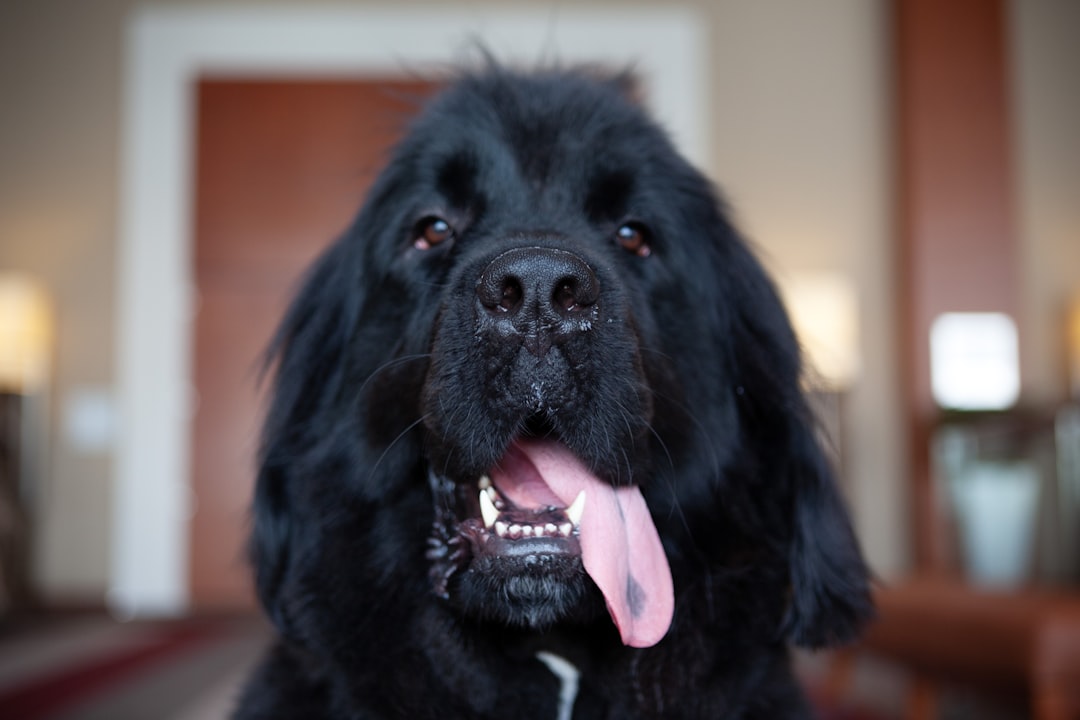
The 18th-century Newfoundland fisherman knew the difference between a dog that played in the surf and one that worked it. He did not judge by how the dog looked on the dock. He judged by what happened when the boat capsized. When the crew went overboard, dragging hundreds of pounds of wet wool and heavy gear into freezing Atlantic water, the fisherman did not throw a rope. He threw a dog. And he threw the one with the broadest, most heavily webbed paws.
Those paws are not a cute quirk. They are a functional hydrodynamic tool evolved for heavy water rescue. The Newfoundland’s webbed feet are a biological adaptation that allows a massive dog to move efficiently through cold, rough water, generating the thrust needed to pull a drowning human to shore. Understanding this anatomy changes how you care for the dog, how you exercise it, and why it struggles on hot pavement.
The Mechanics of a Water Dog
To understand why the Newfoundland’s feet are so critical, you have to look at the mechanics of canine swimming. Most dogs swim using a doggy paddle, which is an inefficient, energy-draining motion that relies entirely on leg strength. They do not have the anatomical adaptations to move through water with minimal resistance. The Newfoundland does.
The webbing between the toes is not a thin membrane. It is a thick, durable layer of skin that stretches from the base of the claws to the tip, creating a broad, paddle-like surface. When the dog pushes against the water, the webbing expands, catching more water and generating more thrust. When the dog retracts its foot, the webbing folds inward, reducing drag. This is a biological adaptation that mimics the design of a human swim fin, but it is built into the dog’s own anatomy.
Beyond the webbing, the Newfoundland’s feet are large relative to its body size. This is not accidental. A larger surface area distributes the dog’s weight more evenly, allowing it to stand on slippery, wet rocks without sinking into mud or slipping on ice. The thick, water-resistant fur between the toes is not just for warmth. It prevents ice from forming between the pads, which would otherwise crack the skin and immobilize the dog in freezing conditions. This is a survival mechanism that allowed the breed to work in the harshest marine environments on Earth.
Working Purpose: The Newfoundland’s Original Job
The Newfoundland did not evolve these feet for recreation. It evolved them for work. The breed’s history is tied to the fishing industry of Newfoundland, Canada, where these dogs were essential to the survival of coastal communities. Their job was not to fetch sticks or play in the surf. Their job was to pull heavy fishing nets, haul equipment, and rescue drowning sailors.
Imagine a scene from the 18th century. A fishing boat capsizes in the freezing Atlantic. The crew is struggling in the water, their clothes heavy with seawater, their strength fading fast. A Newfoundland jumps in. It does not hesitate. It swims to the nearest survivor, positions itself, and allows the drowning person to grab onto a leather strap around its neck. Then, it swims back to shore, dragging the weight of a grown man through rough, freezing water.
This is not a myth. This is a documented historical reality. The Newfoundland’s webbed feet, combined with its powerful hindquarters and dense, water-resistant coat, made it the only dog capable of performing this task consistently. Without the webbing, the dog would sink. Without the coat, it would freeze. Without the strength, it would fail. The webbed feet are the critical component that made the rescue possible.
Why This Matters for Modern Owners
If you own a Newfoundland, or if you are considering one, you need to understand what these feet mean for your daily life. The webbing is not just a historical curiosity. It is a physical reality that affects how you care for your dog, how you exercise it, and how you keep it safe.
First, the webbing traps debris. Sand, small stones, and seaweed can get stuck between the toes, leading to irritation, infection, or even pain. You must check your dog’s feet after every walk, especially if you live near the coast or spend time outdoors. A simple rinse with fresh water and a thorough drying of the toe spaces will prevent most issues. If you notice redness, swelling, or a foul odor, see a vet immediately. Infection in the toe spaces can spread quickly and become serious.
Second, the webbing changes how your dog moves on land. Because the feet are broad and flat, Newfoundlands can be clumsy on hard surfaces. They are not built for running on concrete or asphalt. They are built for swimming and pulling. If you live in a hot climate, you must be extra careful. The thick fur and heavy paws can overheat quickly on hot pavement. Walk your dog early in the morning or late in the evening, and always check the temperature of the ground with your hand. If it is too hot for your hand, it is too hot for your dog.
Third, the webbing requires specific grooming. You cannot just brush a Newfoundland’s coat and call it a day. You must separate the toes and brush out any tangles or debris. The fur between the toes is dense and can mat easily if left unchecked. Use a wide-toothed comb or a specialized grooming tool to gently work through the fur. Do not pull. Do not force. If you encounter resistance, stop and use a detangler spray. The goal is to keep the webbing clean and functional, not to make it look perfect.
The Misconception: Webbing Is Just for Looks
There is a persistent myth that the Newfoundland’s webbed feet are purely aesthetic, a cute feature that adds to the breed’s charm. This is false. The webbing is a functional adaptation that was selected for over centuries of hard, dangerous work. It is a tool.
When you see a Newfoundland standing in the water, notice how its feet move. They do not flap or splash. They push. They drive. They generate power. This is the result of selective breeding that prioritized function over form. The breeders of the 18th and 19th centuries did not care about how the dog looked on a show ring. They cared about how the dog performed in the water. And the webbed feet were the key to that performance.
This misconception matters because it leads to poor care. If you believe the webbing is just for looks, you might ignore the practical needs it creates. You might not check for debris. You might not protect the skin from ice. You might not understand why your dog struggles on hot pavement. You might not realize that your dog’s primary strength is in the water, not on land. These are not minor oversights. They are safety risks that can lead to injury, infection, or even death.
What You Can Do Today
If you have a Newfoundland, start by checking its feet. Look between the toes. Look at the pads. Look at the webbing. Is it clean? Is it dry? Is there any redness, swelling, or odor? If yes, see a vet. If no, rinse it with fresh water and dry it thoroughly. This is a simple task that takes five minutes, but it can prevent serious health issues down the road.
If you are considering a Newfoundland, ask yourself if you are prepared for the responsibilities that come with these feet. Do you have access to water? Do you have the time to groom and maintain the webbing? Do you live in a climate that is safe for a heavy, double-coated dog? If the answer is no, this breed is not for you. There are many other breeds that are better suited to your lifestyle. Do not choose a Newfoundland because you like the look of the webbing. Choose it because you understand the work it represents.
The Newfoundland’s webbed feet are not a quirk. They are a testament to the power of selective breeding, the harshness of the natural world, and the enduring bond between humans and dogs. They are a reminder that every physical trait in a dog has a purpose, and that purpose is often far more complex than we realize. Respect the feet. Respect the dog. And never underestimate the power of a well-designed paw.
Sources & Further Reading
- Newfoundland — American Kennel Club
- The Newfoundland Dog: History, Breed Standard, and Care — PetMD
- Breed Standard: Newfoundland — Fédération Cynologique Internationale