
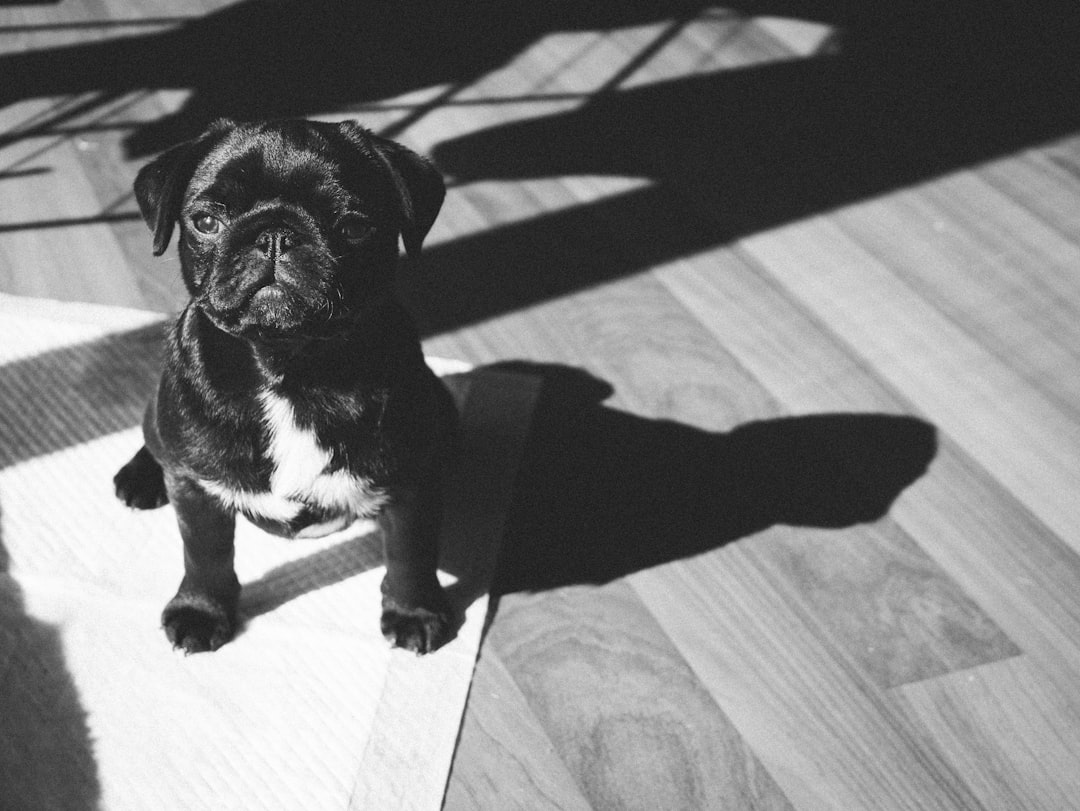
A puppy’s bladder holds roughly 15 milliliters of liquid. That is a single teaspoon. When you place a creature with a teaspoon of capacity into a house the size of a warehouse, you are not dealing with a behavioral problem. You are dealing with a physics problem.
Most owners treat indoor accidents as a failure of the dog’s character. They assume the puppy is being spiteful, or lazy, or simply refusing to listen. This assumption leads to the most common mistake in early housebreaking: the reliance on puppy training pads as a permanent solution. Pads do not teach a dog where to go. They teach a dog that the living room rug is an acceptable toilet. When the pads are eventually removed, the dog does not suddenly remember the rules. The dog walks onto the hardwood floor, smells the old urine, and assumes the game is back on.
The solution is not a better pad. It is not a stronger treat. It is a rigid, biologically accurate schedule that accounts for the puppy’s actual physiological limits. If you want to stop the accidents, you must stop waiting for the dog to tell you. You must become the clock.
The 15-Milliliter Reality
To build a schedule that works, you must first accept the physical constraints of your puppy. A newborn puppy’s bladder is microscopic. By eight weeks, it might hold a thimble’s worth. By six months, it might hold a shot glass. If you ignore this capacity and expect a two-month-old puppy to hold it for four hours, you are not training. You are setting them up for failure.
The golden rule of puppy housebreaking is simple: a puppy can hold their bladder for one hour for every month of age, up to about six months. A two-month-old puppy can hold it for two hours. A three-month-old for three. This is not a suggestion. It is the hard limit of their developing sphincter muscles.
When you understand this limit, the schedule stops being a guess. It becomes a math problem. If your puppy is eight weeks old, they need to go outside every two hours. Not every three. Not whenever they “ask.” Every two hours. This includes right after they wake up, right after they eat, and right after they play. These are the three biological triggers that force the bladder to contract. If you miss one of these windows, an accident is not a choice. It is a physiological inevitability.
Why Training Pads Create a Permanent Leak
The puppy training pad is the most expensive mistake you can make in housebreaking. They are cheap, they are absorbent, and they are everywhere. They are also the primary reason adult dogs cannot be trusted off-leash in a living room.
When you lay down a pad, you are physically marking a specific square of your home as a bathroom. Dogs are not inherently clean animals; they are den animals. They instinctively avoid soiling their sleeping area. By providing a pad, you are giving them a designated den-toilet. The problem arises when you try to take the pad away. The dog does not suddenly develop a moral compass. The dog simply looks for the next available surface that smells like urine. That surface is usually your sofa, your rug, or your favorite pair of shoes.
Furthermore, pads do not teach the dog the difference between “inside” and “outside.” They only teach the dog that “on the pad” is acceptable. If your goal is a dog that goes outside, the pad is a distraction. It is a competing signal. It dilutes the training process by half, because you are teaching the dog two conflicting rules simultaneously.
Building the Schedule: The 20-Minute Bladder Rule
So how do you build a schedule that actually works? You start by mapping the day around the puppy’s biological clock, not your convenience. This is the 20-Minute Bladder Rule: you do not leave the puppy unsupervised for longer than their monthly age in hours, minus a twenty-minute buffer.
Let’s look at an eight-week-old puppy. Their capacity is two hours. Subtract the twenty-minute buffer, and you get a maximum unsupervised time of one hour and forty minutes. This means your schedule must look like this:
- 7:00 AM: Wake up. Immediate trip outside. Do not let them sniff the living room first. Do not let them play. Go straight to the designated spot.
- 7:15 AM: Reward. If they go, high-value puppy training treats are delivered immediately. If they do not go, bring them back inside, confine them to a crate or pen for 15 minutes, and try again at 7:30 AM.
- 9:00 AM: Second trip. Even if they went at 7:15, their bladder refills fast. Another trip.
- 11:00 AM: Third trip.
- 1:00 PM: Fourth trip.
This pattern continues until bedtime. The key is consistency. You are not asking the puppy to learn. You are providing the environment where learning is possible. If you are working from home, this is easy. If you are working outside the home, this is where puppy training classes near me become non-negotiable. You cannot outsource the schedule. You must be the one to execute it.
The Role of Puppy Training Classes
Many owners hesitate to enroll their puppy in puppy training classes because they believe housebreaking is a solo mission. This is a dangerous misconception. Puppy training classes provide three things that a schedule cannot: socialization, structure, and accountability.
When you bring your puppy to a class, you are exposing them to new surfaces, new smells, and new distractions. This is where the real test begins. A puppy who can hold it in your living room may collapse in a classroom full of other dogs. This is not a failure of training. It is a failure of preparation. Classes teach you how to manage your puppy’s environment when the stakes are higher.
Moreover, a good class forces you to stick to a schedule. You cannot skip a trip because you “feel lazy.” You must show up, you must be on time, and you must be prepared. This external accountability is often the missing link for owners who struggle to maintain the rigor of a housebreaking schedule.
When Accidents Happen: The Reset Protocol
Despite the best schedule, accidents will happen. This is not a sign of failure. It is a sign of biology. When you find an accident, do not punish the dog. Do not rub their nose in it. Do not yell. This does not teach the dog to hold it. It teaches the dog to hide when they need to go, which leads to eating their own feces or hiding in corners to go.
Instead, execute the Reset Protocol:
- Interrupt, do not punish. If you catch them in the act, make a sharp, neutral noise (a quick “oops” or a clap). This breaks their concentration. If they finish, they finish. Do not chase them.
- Immediate reset. Take them outside immediately. If they go outside after the interruption, reward them heavily. This reinforces the correct behavior, not the mistake.
- Clean with enzyme cleaner. Standard cleaners do not remove the pheromones that tell a dog “this is a toilet.” You must use an enzymatic cleaner to break down the urine proteins. If the smell remains, the accident will repeat.
- Adjust the schedule. If the accident happened at 3:00 PM, and your schedule says the next trip is at 3:30 PM, move the next trip to 2:45 PM. You missed a window. Close the gap.
The Long Game: Why This Matters
Housebreaking is not about the first month. It is about the first year. A puppy that is rushed through housebreaking will develop chronic anxiety around elimination. They will learn to hold it until they are in pain, leading to urinary tract infections and bladder stones. A puppy that is given a clear, consistent schedule learns confidence. They learn that they can trust their owner to provide for their needs. They learn that the world is predictable.
This is the real value of the schedule. It is about building a relationship based on trust and predictability. When you stop relying on pads and start relying on a schedule, you are not just housebreaking a dog. You are raising a partner.
Sources & Further Reading
- Housebreaking Your Puppy: A Guide for New Dog Owners — ASPCA
- Puppy Bladder Capacity and Housebreaking Schedule — Cornell University College of Veterinary Medicine
- Enzymatic Cleaners for Pet Stains and Odors — Penn State Extension
Photo by Michelle Middleton on Unsplash.